
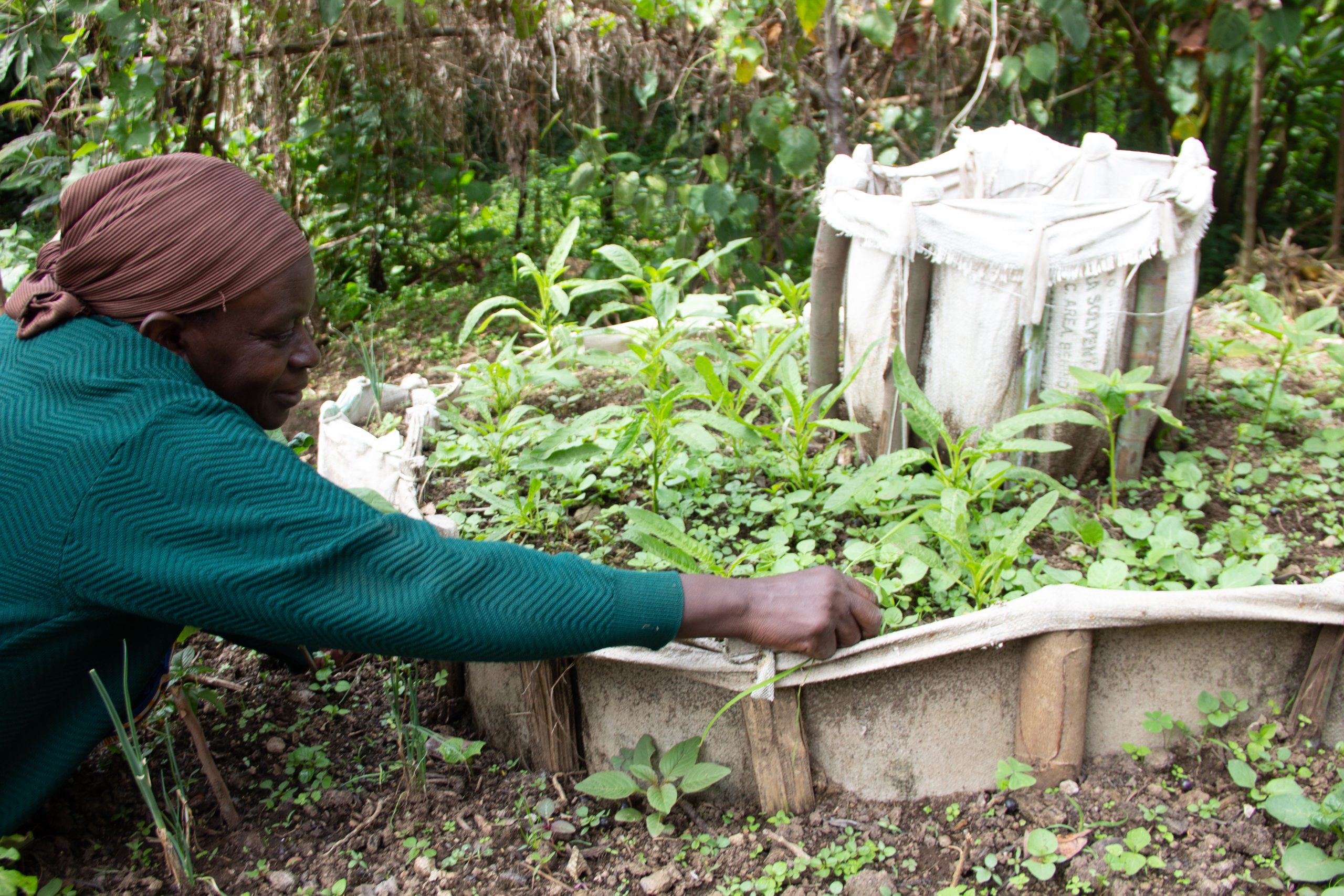
Through the FACE Programme, ACORD Rwanda is supporting farmers to adopt sustainable agricultural practices, strengthen their financial independence and build resilience against climate change.
As climate change continues to affect agricultural production, farmers in Rwanda are increasingly exploring sustainable ways to protect their crops, improve productivity and secure their livelihoods.
In Rwinzovu Village, Murago Cell, Gataraga Sector, Musanze District, members of Abahuje Cooperative are demonstrating how agroecological farming practices can help communities overcome agricultural challenges, particularly during prolonged dry seasons.
Through training and support provided by ACORD Rwanda under the FACE Programme, the cooperative has adopted sustainable agricultural techniques that enable its members to cultivate crops under challenging weather conditions while reducing production costs and improving the quality of their harvests.
One of the most notable achievements is their ability to grow maize during the sunny season, when limited rainfall would traditionally make cultivation difficult.
During a field visit organised to showcase the achievements of the FACE Programme, cooperative members demonstrated how they apply agroecological techniques, particularly mulching, to protect their crops against the effects of changing weather conditions.
Mulching involves covering the soil surface with organic materials to help retain moisture and protect the soil from excessive exposure to sunlight. This technique creates more favourable conditions for crop growth, allowing farmers to maintain production even when rainfall is insufficient.
The cooperative has also adopted the use of organic manure to improve soil fertility without relying on agricultural inputs that may negatively affect soil quality.
Rather than depending entirely on livestock manure or purchasing fertilisers, members have learned to prepare their own organic fertiliser using locally available materials, including grasses and urine.
This approach has reduced their dependence on external agricultural inputs and demonstrated how farmers can make productive use of resources available within their communities.
Another benefit highlighted by the cooperative is the reduction in labour requirements.

From Rwf 200,000 Investment to Rwf 400,000 in Returns
Beyond environmental sustainability, agroecology is also creating economic opportunities for Abahuje Cooperative.
Members shared an example of how an investment of about Rwf 200,000 generated Rwf 400,000 in returns, showing the financial benefits of adopting improved farming practices.
They explained that before embracing agroecology, their previous farming methods often resulted in losses due to production challenges and the costs associated with agricultural inputs.
By using locally available organic materials, conserving soil moisture, and adopting techniques suited to prevailing climatic conditions, the farmers have improved their agricultural practices and financial outcomes.
Munyemanzi Froduald, president of Abahuje Cooperative, explained that although their maize takes longer to mature than maize produced by other farmers, its quality makes it attractive to consumers.
“Although our maize takes longer to grow compared to the maize produced by other farmers, we have found that when it reaches the market, customers buy it quickly because of its quality,” he said.
He also highlighted the financial benefits the cooperative has experienced since adopting the new farming techniques.
“We invested approximately Rwf 200,000 and managed to generate Rwf 400,000 in returns. Previously, the farming methods we used often resulted in losses,” a cooperative member mentioned
The cooperative’s experience demonstrates how sustainable farming practices can contribute to reducing production challenges while creating opportunities for farmers to earn better returns from their agricultural activities.
The transformation taking place within Abahuje Cooperative goes beyond agricultural production, with women also benefiting from financial literacy and savings skills acquired through the Gender Action Learning System (GALS).
Ndacyayisenga Claudette, a member of the cooperative, explained that the training she received over the past four years helped her develop a culture of saving, enabling her to achieve important personal and economic milestones.
“Within four years of receiving GALS training, I learned how to save money, and through those savings, I managed to build a house and buy a cow,” she said.
Her experience illustrates how equipping women with financial management skills can create opportunities for economic independence and improve household living conditions.
Claudette’s achievement demonstrates that empowering women through development programmes can produce benefits that extend beyond agricultural production, enabling them to invest in assets, improve their living conditions and strengthen their economic security.
Speaking during the field visit, Munyentwali François, Coordinator of ACORD Rwanda, said the FACE Programme represents an effort to strengthen the capacity of civil society organisations and communities to address challenges related to gender inequality and climate change.
“The FACE Programme represents an effort to strengthen the capacity of civil society organisations and communities to address the challenges they face, particularly those related to gender equality and climate change,” he said.
The programme was designed to address the interconnected challenges of gender inequality and climate change, recognising that environmental changes can affect women and men differently.
“Women in many farming communities carry significant responsibilities in agricultural production and household food security, yet they may face unequal access to productive resources, training, financial opportunities and decision-making processes.”

The experience of Abahuje Cooperative demonstrates how combining agroecological farming, financial literacy and women’s empowerment can contribute to addressing interconnected challenges of climate change and gender inequality.
From cultivating maize during dry periods to preparing organic fertilisers using locally available materials, the farmers are demonstrating the value of sustainable agricultural practices in strengthening community resilience.
As the FACE Programme reaches the end of its four-year implementation period, the achievements demonstrated by the cooperative highlight the importance of equipping communities, particularly women, with practical knowledge and skills that enable them to respond to changing environmental and economic conditions.


UZABAKIRIHO Gabriel / KIGALI TIMES
Excellent article
In fact, according to members of the Abahuje group, the key to producing this hillside maize during the dry season was to mulch directly after sowing the seeds, without waiting for the seedlings to emerge. This technique promoted seed resilience, moisture retention, and healthy plant growth.