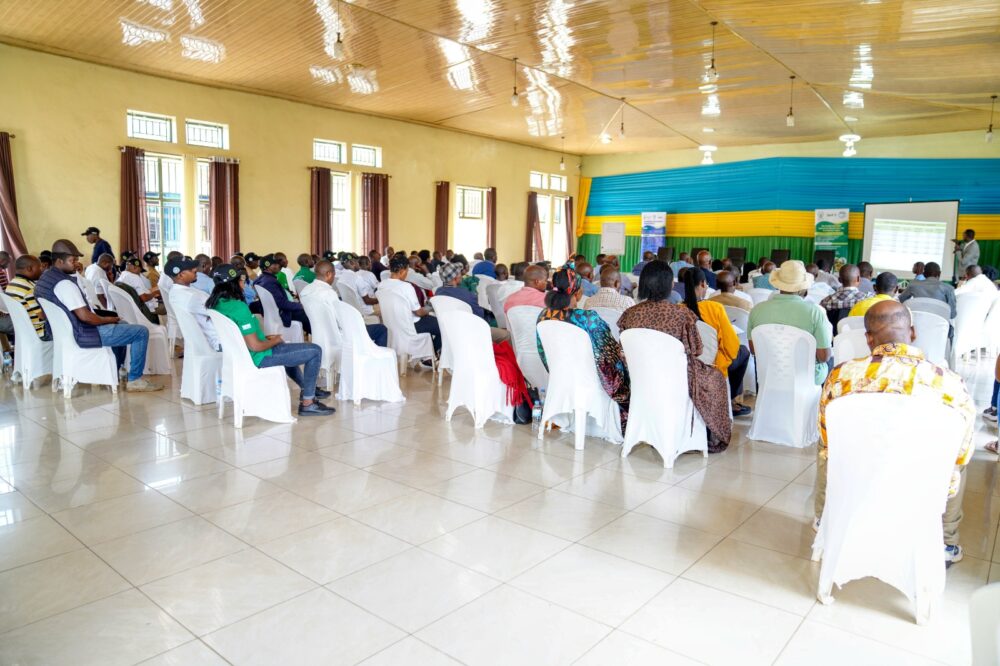
The launch brought together veterinarians, agronomists, farmers, and peer educators, who engaged in dynamic discussions focused on the critical aspects of RDDP II and SAIP II implementation, while reflecting on the achievements of the previous phases.
Rurangwa Emile, Agriculture Development Specialist/Team Leader at RAB-SPIU, explained that SAIP II will be implemented in 20 districts.
Specifically, in Gatsibo District, the focus will be on irrigation systems for both large and small plots of land, as districts in the Eastern Province of Rwanda frequently experience prolonged droughts.
“SAIP II will facilitate access to small-scale irrigation equipment through matching grants and comprehensive support packages. It will also strengthen market linkages and value addition by building the capacity of farmer organizations and value chain actors, improving their access to finance.” Rurangwa explained

This project will help farmers increase productivity and income while reducing risks associated with climate change.
With a budget of $20 million, SAIP II will also provide training to reduce post-harvest losses and enhance the quality of agricultural products, while facilitating market access at the domestic, regional, and international levels.
The initiative’s impact will be significant, targeting smallholder farmers, Water Users Associations (WUAs), Self-Help Groups (SHGs), cooperatives, agro-SMEs, and approximately 65,688 households, of which at least 42 percent will be women, benefiting from nutrition-sensitive agriculture.
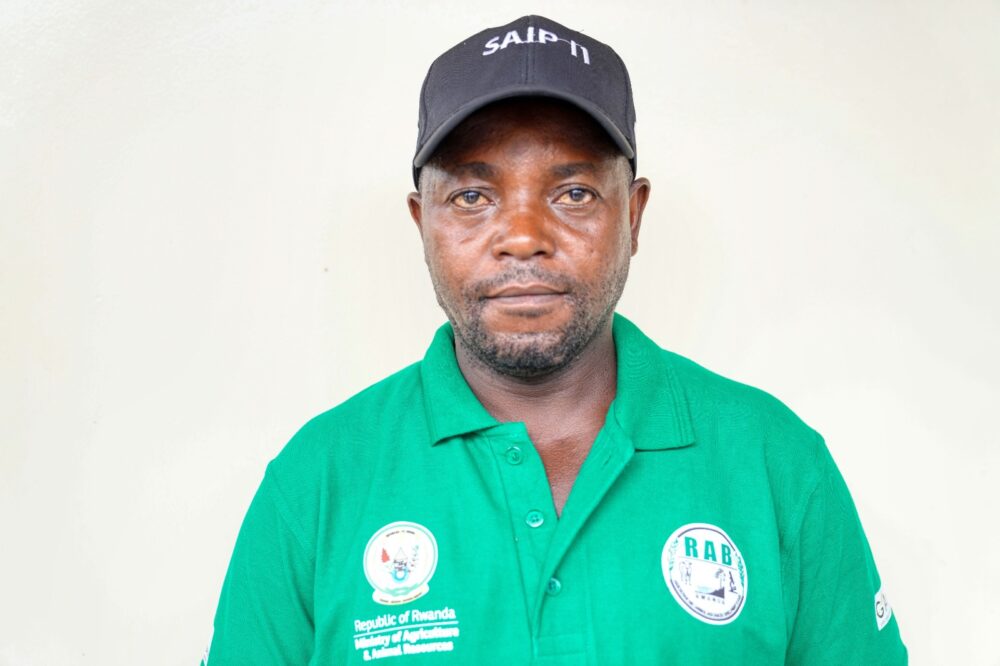
Munyawera Modeste, a beneficiary of SAIP from Gatsibo Sector, Mugera Cell, Kavumu Village, shared his experience of working with SAIP over the past three years. He emphasized the initiative’s impact on improving agricultural practices:
“When SAIP started, we had no idea how to store our produce properly. We used to keep our agricultural products near livestock waste, which led to spoilage. Now, SAIP has helped us build proper storage facilities for both our agricultural products and livestock, which has been crucial in ensuring food security.”
Boosting dairy productivity
To address low milk production, RDDP II will encourage farmers to adopt zero-grazing practices and replace local breeds with improved ones that produce more milk, reducing the need for farmers to keep a large number of cows.
Gasana Ngabo Methode, RDDP2 Manager, highlighted that during RDDP II in Kayonza District, a liquid nitrogen plant will be constructed, essential for safely storing cow semen. This plant, costing approximately one billion Rwandan Francs (Frw), will ensure the semen remains viable for artificial insemination.
He further explained that, “this facility will significantly benefit farmers in Kayonza District, known for large-scale livestock farming, by providing them with closer access to semen storage, thus improving productivity. Currently, farmers face challenges such as delays in receiving semen and unsuccessful inseminations, often resorting to using natural bulls, which is less efficient.”

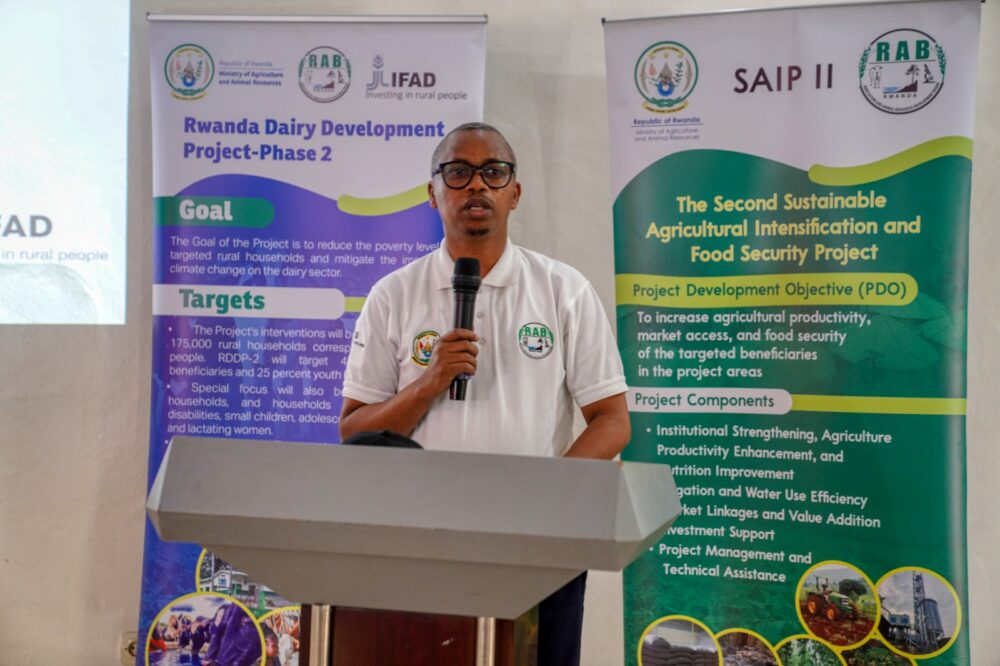
Mbasha David, Corporate Services and Division Manager in Kayonza District, explained how both RDDP II and SAIP II will contribute to the district’s economic growth in line with the country’s National Strategy for Transformation (NST): “These initiatives align with the government’s broader vision to improve agricultural productivity and food security, which will, in turn, boost household incomes and contribute to the district’s overall development.
“By investing in irrigation systems, market access, and livestock improvements, we are laying the groundwork for long-term economic resilience and sustainability.”
The project will also support farmers in establishing mixed pastures by intercropping fodder and food crops, increasing access to water through household-level water harvesting, and bringing extension services closer to farmers.
Niyotwagira Francois, a farmer from Ndego Sector, Kayonza District, expressed his expectations for RDDP II: “We hope that this new phase will help us increase our milk production by providing us with improved breeds and access to necessary infrastructure, such as better irrigation and grazing systems.”
SAIP II will be implemented across nine districts from the initial phase (Rwamagana, Kayonza, Gatsibo, Ngoma, Nyanza, Rulindo, Karongi, Rutsiro, and Nyabihu) and will expand to 11 new districts (Kamonyi, Huye, Ruhango, Muhanga, Gisagara, Nyamagabe, Bugesera, Rusizi, Nyagatare, Kirehe, and Ngororero).
Meantime, The first phase of RDDP benefitted 100,000 farmers across 14 districts, improving milk productivity and market infrastructure, but some challenges remained, which RDDP II seeks to address on a larger scale.