
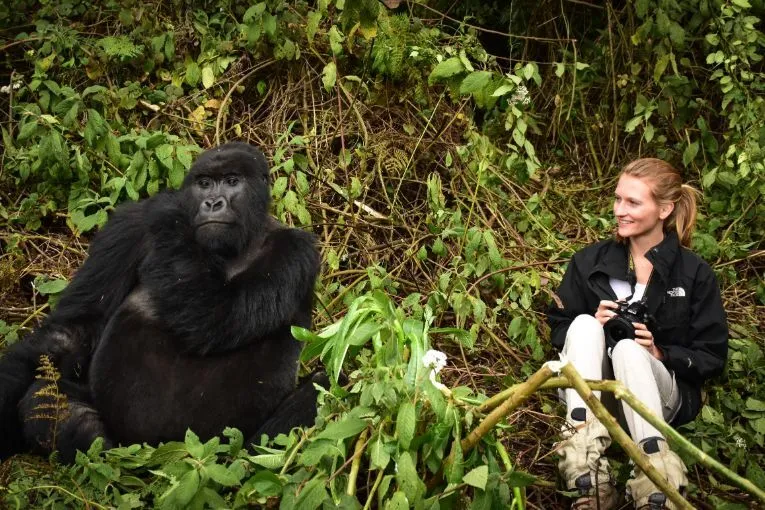
For the past 30 years, the International Gorilla Conservation Programme (IGCP), in partnership with the World Wide Fund for Nature (WWF), has been at the forefront of efforts to protect and restore mountain gorillas and their habitat in the mountainous forests of central East Africa.
While significant progress has been made, these majestic creatures still face major threats such as habitat degradation, disease transmission, human-wildlife conflict, and the impacts of climate change.
Every year, the world celebrates International Gorilla Day on September 24th. In honor of this day, here are 10 essential facts about mountain gorillas, their environment, and ongoing conservation efforts.
1. Around 1,063 Mountain Gorillas Remain in the Wild
Mountain gorillas are a subspecies of the eastern gorilla, and they are endangered, with approximately 1,063 individuals left in the wild. These numbers are based on the most recent census, conducted every 5 to 10 years.
2. They Live in Two Isolated Groups
Mountain gorillas are found in only two regions: the Virunga Volcanoes, spanning three national parks in Uganda, Rwanda, and the Democratic Republic of Congo (DRC), and Bwindi Impenetrable National Park in Uganda, which connects to Sarambwe Nature Reserve in DRC. These regions are high-altitude areas, surrounded by agriculture and human settlements.
3. We Share Around 98% of Our DNA with Gorillas
This close genetic relationship means that mountain gorillas are susceptible to many of the same illnesses as humans, including the common cold. However, since they have not developed immunity to human diseases, even minor illnesses can have severe consequences for them.
4. They Are Among the Largest and Most Powerful Primates
Male mountain gorillas, known as silverbacks, can weigh up to 180 kg (nearly 400 lbs) and stand 170 cm (5’7”) tall on all fours. Females are significantly smaller, weighing around 90 kg (200 lbs) and reaching a height of 150 cm (4’9”).
5. Gorillas Spend Much of Their Day Eating
Mountain gorillas devote about a quarter of their day to eating. Their diet consists mostly of plants—85% is made up of leaves, shoots, and stems—but they also eat larvae, snails, ants, roots, bark, and decaying wood, which provides them with essential sodium.
6. They Build Nests to Sleep In
Mountain gorilla groups sleep together at night, building nests either on the ground or in trees from leaves and foliage. Infants sleep with their mothers to stay safe and warm.
7. Gorillas Use 16 Different Types of Calls
Gorillas have a rich communication system, with 16 distinct vocalizations, including short barks when they are curious or mildly alarmed. Male gorillas also beat their chests, roar, or hoot to intimidate rivals.
8. They Live in Close-Knit Family Groups
Mountain gorillas live in family groups, usually consisting of around 10 members led by a dominant male. Both males and females in the group care for the young, providing nurturing and protection. To prevent inbreeding, most males and 60% of females leave their birth group once they reach maturity.
9. Gorillas Can Live to Be Over 40 Years Old
In the wild, gorillas live up to 40 years. They are considered adults at 8 years of age, and males between 8 and 12 years old are called blackbacks. Once they turn 12, males develop a silver streak on their back and hips, earning them the title of silverback.
10. Threats to Mountain Gorillas Persist
The primary threat to mountain gorillas is habitat loss. As human populations in the region expand, land is increasingly cleared for agriculture, leading to deforestation. Gorillas are also at risk from human diseases, poaching, and conflict with local farmers when they venture out of the forest to eat crops like maize and bananas.
Poorly managed gorilla tourism can also pose a threat to their health and behavior. To mitigate these risks, organizations like WWF, IGCP, Conservation International, and Fauna & Flora International work together to conserve gorillas and their habitats. Protected Area Authority rangers regularly patrol the forests, removing snares and preventing illegal activities.
Rwanda’s Baby Gorilla Naming Ceremony in October 2024
In Rwanda, gorilla conservation is celebrated annually through the Kwita Izina ceremony, where newborn gorillas are given names. On October 18, 2024, Rwanda will host its 20th Kwita Izina event in Kinigi, Musanze District, where 22 baby gorillas will be named. This tradition began in 2005, and over the past two decades, 395 baby gorillas have been named.
Gorilla tourism is a significant contributor to Rwanda’s economy, generating 30% of tourism revenue last year. The Rwandan government, through its Development Board (RDB), ensures that the benefits of gorilla tourism are equitably shared with local communities, while minimizing the environmental impact of tourism on gorilla populations.
As the world celebrates International Gorilla Day, the ongoing efforts to protect mountain gorillas highlight the importance of preserving biodiversity for future generations.