
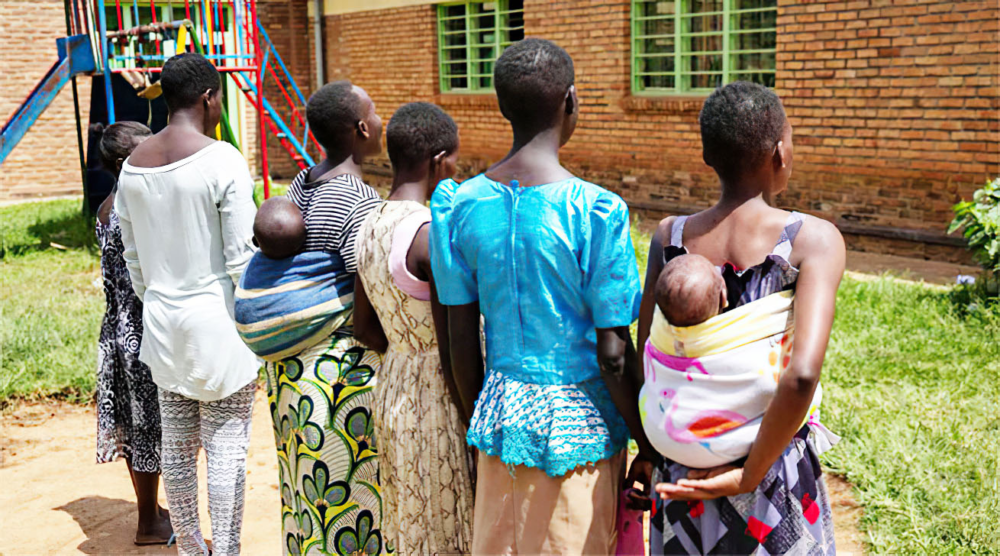
In the remote villages of Remera and Nyamiseke in Byimana Sector, many families are grappling with the painful reality of teenage pregnancies that continue to deepen poverty and place heavy burdens on already struggling households.
Residents say the situation is particularly difficult for young girls born into poor families who later become mothers themselves, only to leave their children in the care of aging parents with limited means of survival.
The affected families live in Muhororo Cell, where most residents rely on pottery and clay work as their primary source of income. Community members say government support programs have significantly improved their lives compared to the extreme poverty they once faced.
According to residents, many families have benefited from improved housing, health insurance coverage through Mutuelle de Santé, and social support programs for elderly citizens.
However, despite those interventions, concerns remain high over the growing number of girls giving birth while still living at home. Residents estimate that in more than 20 households across the two villages, several young women have had children outside marriage, with some already raising three children, including cases involving children from different fathers.
Mukakalisa Scolastica, one of the residents, said three of her daughters have all given birth while living at home, leaving her responsible for raising their children.
“I have three daughters who gave birth while still at home, and they left the children for me to take care of,” she said.
Mukarwaya Monique, a resident of Remera Village, explained that the income earned from pottery is too small to sustain such large households.
“We have children suffering from malnutrition, and most of them are grandchildren born to our daughters,” she said.
Another resident, Ndererehe André, acknowledged the community’s concerns but praised the support programs introduced under President Paul Kagame, saying no child born in those circumstances is denied access to education.
“We would like authorities to help these young mothers acquire vocational skills so they can support their children,” he said.
The Vice Mayor of Ruhango District in charge of social affairs, Mukangenzi Alphonsine, said local authorities have already begun addressing the issue through awareness campaigns targeting young people on reproductive health.
She explained that the district launched a community initiative known as “Masenge Nawe Marume Nganiriza,” aimed at educating youth about responsible sexual behavior.
According to her, young people are encouraged to practice abstinence, and where necessary, to use condoms and other family planning methods available at health facilities.
“We also have a partner, the EAR Church, with whom we are working to educate young mothers and their families on proper childcare and parenting,” she said.
Mukangenzi added that authorities are also encouraging teenage mothers who dropped out of school to return to class, while those seeking employment opportunities will receive support from local leaders.
She further noted that, in collaboration with justice institutions, some of the girls will be assisted in seeking legal action against men responsible for impregnating them.
During visits to the area, several other young girls were found to be carrying unintended pregnancies, with residents expressing concern that many no longer appear alarmed by the situation.
Community members believe stronger and more sustained awareness campaigns are needed to reduce the growing rate of teenage pregnancies, warning that the trend could continue worsening the living conditions of already vulnerable families.
Teenage pregnancy in Rwanda has risen to 8% among girls aged 15–19 as of late 2025, reversing previous declines and highlighting a critical public health and social issue. While Rwanda has made efforts to improve sexual reproductive health, factors like poverty, limited education, and sexual abuse contribute to high rates, particularly in the Eastern Province.
SOURCE: UMUSEKE