
Gabriel UZABAKIRIHO
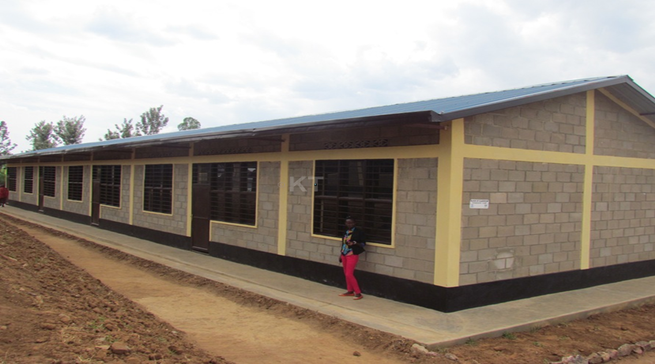
The Rwandan government has announced plans to construct more than 26,500 new classrooms to address overcrowding and phase out double shifts in primary schools, aiming to improve learning outcomes. This was revealed by the Minister of Education, Joseph Nsengimana, on Tuesday, March 4, during a parliamentary session where lawmakers reviewed a report by the Rwanda Governance Board (RGB). The report highlighted issues such as overcrowded classrooms and aging infrastructure, which lawmakers urged the education ministry to resolve.
Nsengimana explained that the ministry conducted a nationwide inspection of schools to assess their condition. The findings showed that there are currently 86,780 classrooms in public and government-aided schools across the country. Of these, 13,869 require renovation, while 5,830 are too old and need to be replaced entirely.
“Some schools are very old, and their classrooms are no longer sustainable. These structures won’t last more than three years, so they must be demolished and replaced with new ones,” he said. However, he noted that 305 classrooms have been identified for urgent renovation, and funding for this has already been allocated.
Phasing Out Double Shifts
In addition to overcrowding, Nsengimana highlighted the issue of double shifts in lower primary levels, where some children attend school in the morning and others in the afternoon. He emphasized that this approach is not ideal, as it limits learning time and negatively impacts students’ academic performance.
“We aim to have all children studying in a single shift. Double shifts reduce the time pupils have for learning, which affects their studies,” he said. To eliminate double shifts and reduce overcrowding, the ministry estimates that 26,523 new classrooms are needed. Specifically, 17,627 classrooms are required to address overcrowding alone.
Impact of School Feeding Program
Nelson Mbarushimana, Director General of the Rwanda Education Board (REB), pointed out that the national school feeding program has significantly increased student enrollment, which is a positive development. However, this has also heightened the need for more classrooms.
Mbarushimana stressed the importance of mobilizing funds for new classroom construction, which is expected to begin in the next financial year. “We need to accelerate the pace of building classrooms to match the growing number of students. This is a priority starting from the 2025/2026 academic year,” he said.
Strategic Goals
According to the Education Sector Strategic Plan for 2024/25 – 2028/29, the government aims to phase out double shifts in pre-primary education and reduce the pupil-to-classroom ratio from the current 62:1 to 46:1 over the next five years. Nsengimana noted that significant progress has already been made, with 27,500 classrooms constructed between 2017 and 2023 under the previous strategic plan. These efforts have helped reduce overcrowding and limit double shifts to only Primary 1 through Primary 3.
“Double shifts were once common across all primary levels, but thanks to the new classrooms, they are now only in the lower grades,” he said. The government remains committed to improving educational infrastructure to ensure better learning environments for all students.
Source: TNT