
Gabriel UZABAKIRIHO
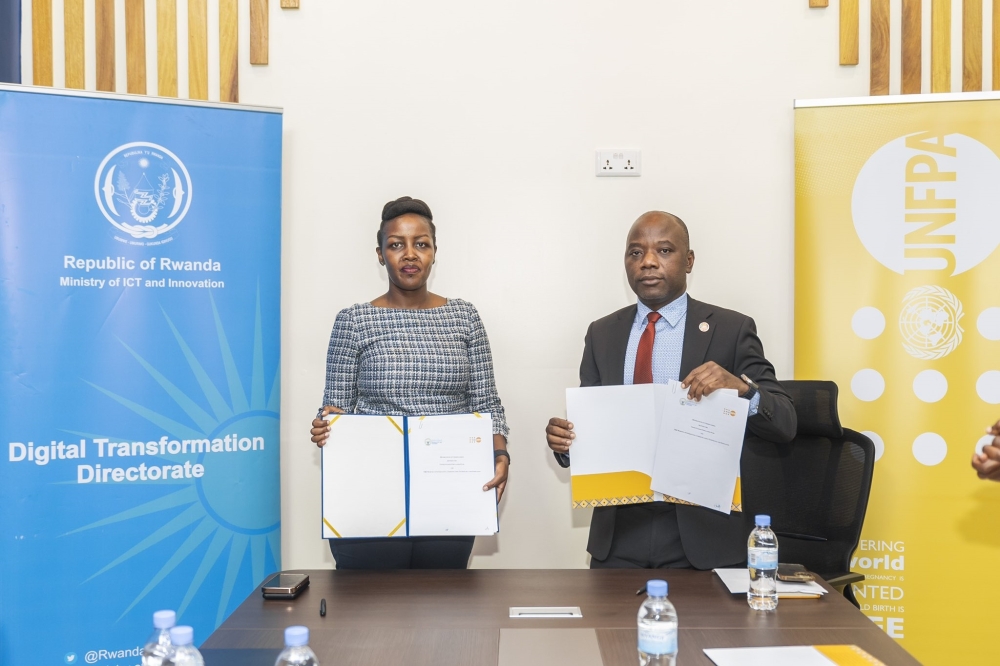
Kigali, Rwanda – In a landmark move to harness technology for social impact, the United Nations Population Fund (UNFPA) and Rwanda’s Ministry of ICT and Innovation (MINICT) have signed a Memorandum of Understanding (MoU) to improve access to Sexual and Reproductive Health and Rights (SRHR) services and strengthen efforts to combat Gender-Based Violence (GBV) through digital solutions.
The partnership will focus on using digital platforms and mobile technologies to provide accurate, timely information on SRHR and GBV prevention, including technology-facilitated GBV, targeting young people, especially women. Key initiatives include co-developing a digital application to support GBV survivors by offering essential information, case reporting tools, and access to online support services. Additionally, the collaboration will create a robust Monitoring and Evaluation (M&E) tool to track SRHR innovations, research technology-facilitated GBV, and mobilize resources to scale up these efforts.
At the signing ceremony, Paula Ingabire, Rwanda’s Minister of ICT and Innovation, emphasized the importance of inclusive digital transformation. “This partnership with UNFPA reinforces MINICT’s commitment to using innovation to bridge gender gaps, enhance digital literacy, and improve the sexual and reproductive well-being of Rwandans,” she said. Ingabire also highlighted the need for digital solutions that create safe spaces for GBV survivors to seek help, access information, and report cases, ensuring technology serves as a force for social good.
Dr. Olugbemiga Adelakin, UNFPA Country Representative for Rwanda, underscored the transformative potential of technology in addressing societal challenges. “This collaboration represents a pivotal moment in using digital tools to empower young people and women. By providing access to critical SRHR information and GBV support services, we are advancing toward a more equitable and inclusive society,” he said.
The partnership builds on existing collaborations between UNFPA and MINICT, including UNFPA’s support for the Hanga Pitchfest under the Hanga SRHR initiative. This program encourages youth-led innovations to improve access to SRHR services, empowering young innovators to develop digital solutions for pressing health challenges in their communities.
“We are particularly excited about engaging young people through this partnership. By integrating ICT into SRHR and GBV programs, we can create innovative solutions that align with their needs and aspirations,” Dr. Adelakin added.
The collaboration also includes joint efforts to combat technology-facilitated GBV. Under the guidance of the Ministry of Gender and Family Promotion (MIGEPROF), UNFPA and MINICT have been involved in developing a GBV mobile application that provides survivors with access to critical services, legal support, and emergency assistance.
Another focus area is the monitoring and evaluation of youth-led innovations. Working with the ICT Chamber, UNFPA and MINICT are developing a comprehensive tool to track and assess the impact of digital solutions in SRHR and GBV prevention, ensuring these innovations are evidence-based, scalable, and responsive to the needs of vulnerable populations.
Beyond technology development, the agreement promotes ongoing collaboration through knowledge-sharing, regular consultations, and joint resource mobilization. These efforts aim to ensure that digital solutions remain relevant, accessible, and impactful for those who need them most.
From TNT