
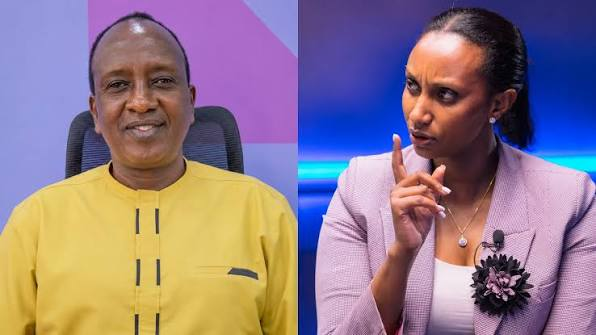
The University of Rwanda’s spokesperson, Ignatius Kabagambe, has apologised to journalist Scovia Mutesi following a heated exchange on X over the university’s handling of sexual harassment allegations against some of its lecturers.
In a statement posted on X on November 15, 2026, Kabagambe acknowledged that some of his remarks towards Mutesi were hurtful and inappropriate. He said he had voluntarily deleted the posts.
“Because what unites us is greater than what divided us yesterday. Because we may have disagreed, yet we normally share the same journey and common strategies for building and protecting Rwanda. Because we have fought, and are normally expected to continue fighting, against wrongdoing in our country,” he wrote.
Kabagambe expressed regret over his comments and assured Mutesi that he would not repeat such behaviour.
“I have deleted what I wrote that hurt you, both from my heart and from X, voluntarily,” he added.
He also extended apologies to Sylvia Nsanga and Olga, saying that he had similarly engaged with them in an inappropriate manner.
“Sylvia Nsanga and Olga, we also had an unpleasant exchange yesterday, yet I should always maintain courtesy in my language. Please forgive me too, daughters of Rwanda. I will not repeat it,” he said.
He pledged to treat them with greater respect, even when they hold different opinions.
In response, Mutesi acknowledged the apology but stressed that it did not resolve the underlying concerns facing students at the university.
“An apology does not erase the fact that students have a problem at the institution you speak for. Address it,” she responded.
The disagreement followed a post published on X on November 11 by a user identified as Keza Leila, who alleged that some lecturers at the University of Rwanda’s Huye campus were demanding sexual relationships from students and threatening to lower their marks if they refused.
Kabagambe responded by questioning the identity of the account holder, suggesting that the person was seeking followers through an account using a false identity.
In a subsequent explanation, he said the identity provided did not appear on the University of Rwanda’s student register.
He maintained that protecting whistleblowers who report wrongdoing was important, but argued that individuals and institutions also needed protection against false allegations.
Mutesi criticised the university’s response, arguing that it should first have demonstrated its commitment to investigating the allegations rather than focusing on whether the person who raised them was one of its students.
She also warned that the manner in which the whistleblower was treated could discourage other students from reporting sexual harassment.
In their subsequent exchange, Kabagambe questioned Mutesi’s educational background and accused her of attempting to lecture him on the responsibilities of a university spokesperson.
Mutesi responded by raising questions about his departure from media organisations and related institutions, as well as corruption cases involving lecturers at the University of Rwanda.
Following the exchange, Kabagambe issued his apology a day later, emphasising that their shared commitment to the country should outweigh their disagreements and that differences in opinion should not undermine mutual respect.
The apology has, however, not addressed the underlying sexual harassment allegations, which remain the central concern raised in the debate.