
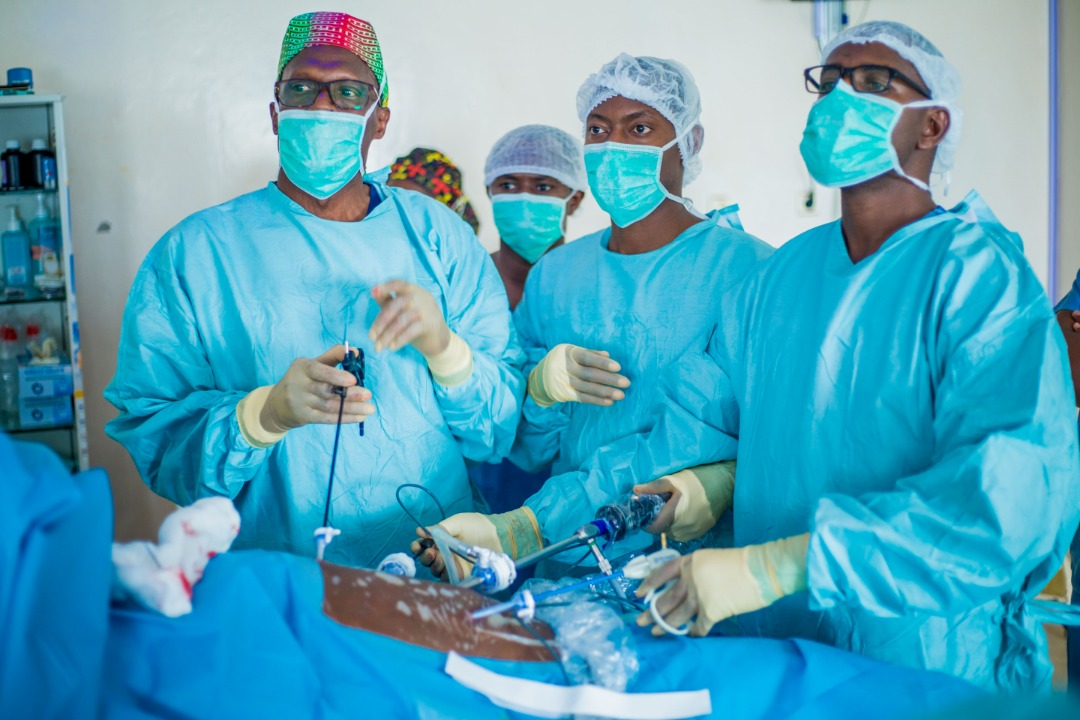
Patients in Rwanda who need liver transplants are expected to start receiving the treatment locally in 2027, eliminating the need to travel abroad for the procedure, as has traditionally been the case.
The announcement was made on October 27, 2026, when King Faisal Hospital received a team of specialists in surgery and organ transplantation from Türkiye’s Acıbadem Hospitals Group.
The visit aims to strengthen cooperation between the two institutions in preparation for the introduction of liver transplant services in Rwanda. The new service will build on kidney transplantation, which King Faisal Hospital began offering in May 2023.
Dr Augustin Sendegeya, Director of Medical Services at King Faisal Hospital, said the number of patients in Rwanda requiring liver transplants was increasing, while delays in accessing treatment could put their lives at risk.
He explained that when the liver becomes severely damaged and can no longer perform its essential functions, transplantation may be the only treatment capable of saving the patient’s life.
He also noted that liver transplant procedures abroad are expensive, adding that introducing the service in Rwanda would help reduce the financial and logistical challenges faced by patients.
“We have received specialists from Türkiye’s Acıbadem Hospitals Group. We will discuss how to introduce this new liver transplant service. We will also collaborate on research and train doctors in kidney and liver transplantation,” Dr Sendegeya said.
He added that Rwanda had already made progress in kidney transplantation, with approximately 115 patients having received the service at King Faisal Hospital.
Prof. Hamdi Karakayali, a senior specialist at Acıbadem Hospitals Group with expertise in kidney and liver transplantation, said diseases affecting these organs were increasing worldwide, highlighting the need to strengthen treatment capacity.
He described kidney transplantation as a highly effective treatment, noting that success rates can reach 99% when procedures are performed by experienced specialists.
Patients with damaged kidneys can also receive haemodialysis, a treatment that uses a machine to filter the blood and perform some of the functions that failing kidneys can no longer carry out.
However, he explained that liver disease presents a greater challenge when the organ is severely damaged because no machine can fully replace all its functions in the same way dialysis can partially replace kidney function.
“Liver diseases are very serious and difficult to treat. When the liver is severely damaged, transplantation may be necessary. Liver transplantation has a success rate of more than 90%,” Prof. Karakayali said.
He revealed that during his 33 years working in organ transplantation, he had participated in kidney transplants for approximately 3,500 patients and liver transplants for another 2,500.
He said one of the most rewarding aspects of his work was seeing patients recover and continue living their lives, particularly children.
“It makes me happy to see the people I have treated recover, especially children. It is rewarding to treat a child, see them continue living and going to school, and then meet them again years later when they have grown up and started a family,” he said.
Organ Donation Remains a Major Challenge
Prof. Karakayali said the shortage of people willing to donate their organs to help patients was one of the major challenges facing transplantation programmes worldwide.
He explained that organ donation requires more than the involvement of medical professionals. It must also comply with relevant laws and regulations to protect the rights and safety of both donors and recipients.
He noted that Türkiye had made progress in this area. According to him, approximately 80% of the 1,400 patients who receive liver transplants in the country are given organs donated by living donors.
In liver transplantation, a living person can donate part of their liver because the organ has the ability to regenerate. A liver can also be donated by a deceased person, provided the applicable legal and medical requirements are met.
Although both options are possible, Prof. Karakayali stressed that securing enough donated organs remains a significant challenge.
“In Türkiye, as in the rest of the world, the number of people willing to donate their organs so they can be given to others remains low,” he said.
KIGALI TIMES