
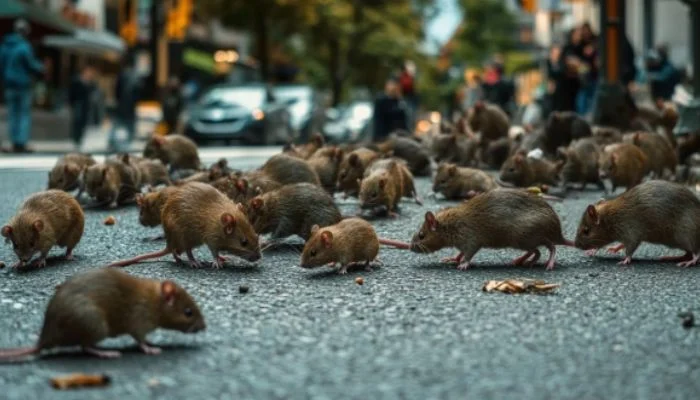
Brussels, the capital of Belgium, is facing a serious rat infestation, with rodents increasingly appearing across the city. In response, authorities have nearly tripled the budget for rat control and introduced new methods to track down and eliminate the pests.
One of the latest measures involves using ferrets, small carnivorous mammals known for their ability to hunt rats, in an unusual approach to controlling the growing rodent population in the city centre.
On Thursday, October 15, 2026, Brussels authorities announced plans to hire specialists to hunt rats using ferrets. The animals will be released into rat burrows to flush the rodents out, making it easier for them to be captured.
The operation will initially focus on an area near the Brussels sewage system. Authorities will assess the effectiveness of the method before deciding whether to expand its use.
Although the approach may appear unconventional, the municipality of Etterbeek, also within the Brussels region, already uses ferrets as part of its rat-control efforts.
Unlike conventional traps, the method relies on animals entering the places where rats hide and forcing them out of their burrows.
Other measures include the installation of modern, technology-equipped traps in pedestrian areas.
The traps consist of boxes containing scented water designed to attract rats. Once the rodents enter, they fall into the water and drown. Their bodies are then frozen before being collected by a specialised company.
The traps have already caught approximately 1,400 rats. However, Gaia, an animal-rights organisation, has criticised the method, arguing that it causes suffering to the rodents.
Brussels Mayor Philippe Close has made tackling the infestation a priority. In May, a dedicated task force was established to monitor the situation and coordinate efforts to address the problem.
The budget for rat control in the city centre has also increased nearly threefold, rising from €35,000 to €100,000. The increase highlights the growing concern among city authorities over the scale of the infestation.
KIGALI TIMES