
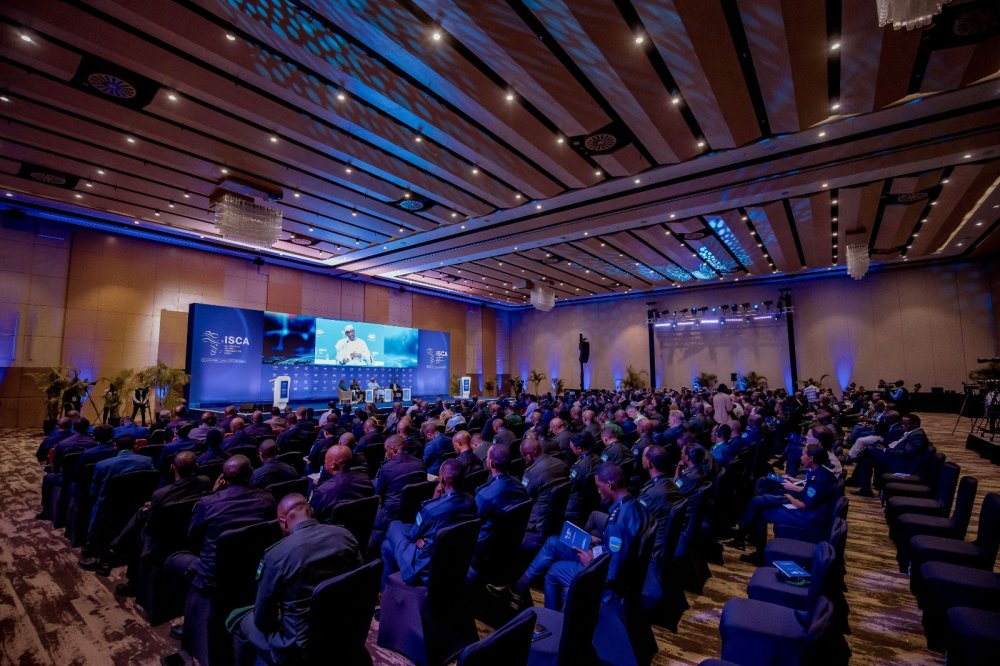
KIGALI — African countries need to invest more in advanced technology and equip their citizens with the skills required to use it as the continent seeks to strengthen national security and protect its sovereignty, Rwanda’s Foreign Minister Olivier Nduhungirehe has said.
Nduhungirehe made the remarks on Wednesday, August 12, 2026, while opening the International Security Conference for Africa (ISCA) in Kigali.
He said rapid advances in artificial intelligence (AI), autonomous systems and other emerging technologies are fundamentally changing the nature of modern warfare, creating both security challenges and opportunities for African countries.
The war between Russia and Ukraine has demonstrated how technology can allow countries to conduct attacks hundreds or even thousands of kilometres from the battlefield using drones, while autonomous military systems are increasingly capable of detecting targets, analysing information and making decisions with limited human intervention.
Nduhungirehe said similar developments could be observed in recent conflicts involving Israel, Iran and the United States, where drones, intelligence capabilities and coordinated attacks have demonstrated the growing role of advanced technology in warfare.
The Foreign Minister warned that autonomous systems and AI are becoming increasingly accessible not only to governments but also to armed groups and other non-state actors.
“Advanced autonomous systems and artificial intelligence are becoming increasingly accessible to non-state actors. This means our militaries and security institutions must adopt these technologies and remain ahead,” Nduhungirehe said.
He argued that Africa could not afford to remain on the sidelines as military technology evolves.
According to the minister, African countries need to understand not only how emerging technologies can be used to address security threats, but also how they affect national sovereignty.
The continent continues to face conflicts involving terrorist organisations and armed groups, particularly in parts of West Africa and the Great Lakes region.
Nduhungirehe said advanced technology could help African countries respond more effectively to terrorism, armed attacks and organised crime.
“Advanced autonomous technology is an opportunity. It can help us respond more effectively to some of the threats to our security, including terrorism, armed groups and organised crime.”
However, he stressed that African countries would need to invest in their own capabilities rather than simply importing expensive technologies.
He called for greater investment in human capital, stronger security institutions and local innovation capable of developing solutions tailored to African challenges.
Colonel Patrick Nyirishema, Director General for Research and Development in the Rwanda Defence Force, said the traditional measures of military strength are also changing.
In the past, military strength was often assessed by the number of troops, weapons and industrial capabilities a country possessed. Today, he said, technology is increasingly becoming a decisive factor.
“We have entered an era where machines can observe, analyse and make decisions, reducing the role previously performed by humans.”
Nyirishema said this transformation would also affect how African countries recruit and train their military personnel.
With advanced technology becoming integrated into security institutions, militaries may require fewer personnel, but those personnel will need highly specialised skills.
He said armed forces will increasingly need people capable of operating, developing and maintaining advanced systems, as well as military planners who understand how to incorporate those technologies into operations.
Mali is among the African countries that have increasingly turned to technology to address its security challenges.
Malian Foreign Minister Abdoulaye Diop said the size of the country — which covers more than 1.2 million square kilometres — makes it difficult to rely solely on conventional military personnel to protect its territory.
As a result, Mali has invested heavily in military technology, particularly drones.
“Five years ago, Mali did not have drones in its inventory. Today, we have hundreds of these systems being used by our security forces,” Diop said.
He added that young Malian citizens have been trained to operate the drones as part of efforts to address the country’s security challenges.
Diop said technology has consequently become an increasingly important component of Mali’s national security strategy.
The discussions at ISCA highlighted a broader question for African governments: whether they will develop the human capacity needed to operate emerging technologies or continue relying heavily on externally developed systems.
Nduhungirehe said Rwanda is seeking to keep pace with technological developments, but urged other African countries to rethink how they prepare their security institutions.
He said investment should go beyond purchasing expensive security systems and instead focus on understanding the technological changes taking place in everyday life and their implications for national defence.
The ISCA conference provided a platform for African policymakers, security experts and researchers to exchange ideas and explore locally driven approaches to emerging security challenges facing the continent.
KIGALI TIMES