
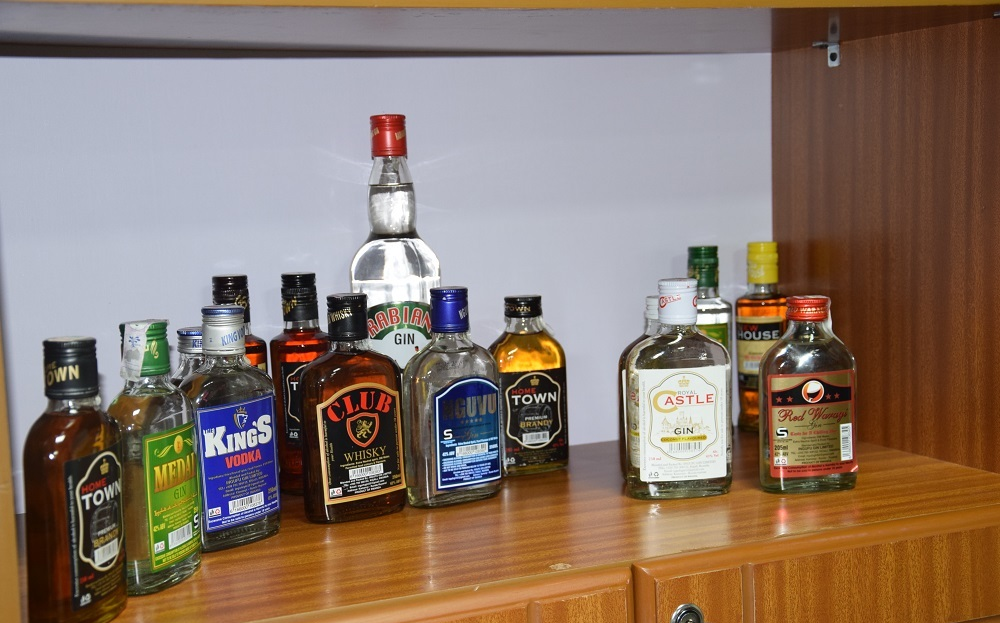
KIGALI – Rwanda’s authorities have arrested 80 people suspected of manufacturing and distributing substandard alcoholic beverages as the country intensifies its crackdown on illicit alcohol products linked to serious public health concerns.
Among those arrested is Ntihanabayo Samuel, commonly known as Kazungu, the owner and manager of Ingufu Gin, a company accused of producing alcoholic beverages that failed to meet required safety standards.
Ntihanabayo and 15 other suspects arrested in Kigali were presented to the Rwanda Investigation Bureau (RIB) on August 8, 2026. Two employees of Ingufu Gin, including a quality control officer and a production officer, were also arrested.
Another suspect presented by authorities was Oluwatosin Ayayi, the operations manager of Kerry Taste and Nutrition Rwanda.
The suspects also include individuals linked to Ebeneza Hub, Sakaza Fruit, Entreprise Urwibutso, African Buffalo, Piphany Company and Lotas Medical Group.
The arrests come amid a nationwide operation targeting manufacturers and distributors of alcoholic beverages that fail to comply with health and safety regulations.
Since August 2, the Rwanda Food and Drugs Authority (Rwanda FDA) has closed 148 factories involved in the production of non-compliant alcoholic beverages and suspended the products manufactured by the affected companies.
Authorities say inspections found that some manufacturers were using improperly processed ethanol in alcoholic beverages, posing serious risks to consumers.
According to the Rwandan government, at least 50 people have died since January 2026 after consuming substandard alcoholic beverages, while about 100 people have reportedly lost their eyesight. Authorities also estimate that approximately 11,000 people across the country have developed dependence on such drinks.
RIB spokesperson Dr Murangira B. Thierry said the investigation has expanded beyond factory owners and workers to include people responsible for inspection and licensing within public institutions, local government officials and individuals involved in informal production.
He said the suspects are being investigated for four offences: providing a person with a substance capable of causing death or serious harm to health, forging or using forged documents, embezzlement and disobedience of lawful authority.
“They have one thing in common. They are all linked to ethanol,” Dr Murangira said.
He added that some manufacturers allegedly used expired materials and unauthorised measurements in the production process in an effort to maximise profits, without considering the consequences for consumers.
“Currently, 80 people have been arrested across the country, 16 of whom were arrested in Kigali and presented to the public. Investigations are still ongoing,” he said.
Dr Murangira stressed that protecting public health remains the priority.
“There is nothing that can be traded for human life. Everything being done is in the public interest.”
RIB said joint inspections with relevant government agencies uncovered several violations among the businesses under investigation.
Some facilities were operating without registration, while others were manufacturing products that had not received the required quality approvals. Inspectors also found facilities operating under poor hygiene conditions, producing alcohol in unsuitable locations or obstructing regulatory inspections.
The latest arrests form part of Rwanda’s wider campaign against illicit and substandard alcoholic beverages, following growing concerns over their impact on public health.
Authorities have warned manufacturers, distributors and individuals involved in the illegal production of alcoholic drinks that they will face legal action, as enforcement operations continue across the country.
KIGALI TIMES