
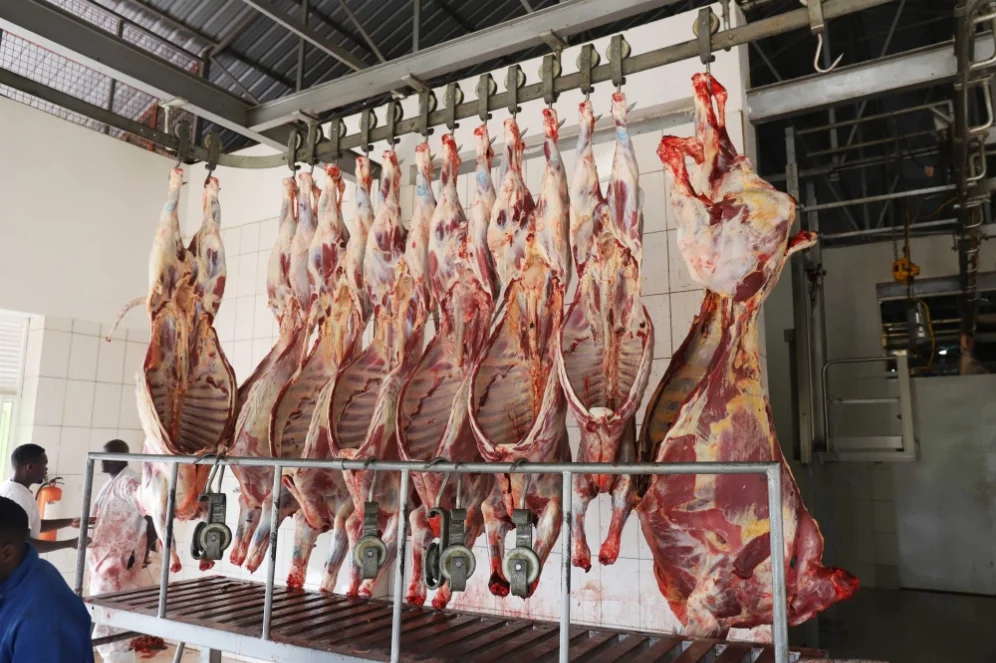
Meat has long been a staple of Rwandan meals, whether served at restaurants, family gatherings, or in homes. Beef, chicken, and goat are commonly found on the plate, but soaring prices are now making meat increasingly difficult for many consumers to afford.
Across the country, restaurants and households are adapting to the sharp increase in meat prices. Some restaurants have stopped serving meat altogether, while others have raised meal prices to avoid losses. Several establishments have replaced meat with eggs, while others have increased the cost of a plate by between Rwf500 and Rwf1,000.
Markets, particularly in Kigali and Rwanda’s Eastern Province, are experiencing a severe shortage of meat supplies.
Today, meat has become a luxury item for many households. A kilogram of beef now sells for between Rwf10,000 and Rwf13,000, depending on the market, up sharply from its previous price of Rwf6,500 to Rwf8,000.
Livestock Disease Drives Supply Shortages
Olivier Mbabazi, a veterinarian at SABAN Ltd slaughterhouse in Nyabugogo, told IGIHE that authorities introduced strict livestock inspections after an outbreak of a contagious animal disease was detected. Movement restrictions and quarantine measures were imposed in several districts to prevent the disease from spreading nationwide.
“If the affected districts had not been placed under quarantine, the disease could have spread across the country and even infected people working here,” Mbabazi said. “As a result, the few cattle that were allowed to reach the slaughterhouse from other regions arrived at much higher prices, forcing us to increase meat prices.”
According to Mbabazi, the wholesale price of beef rose from Rwf6,000 to Rwf8,500 per kilogram, prompting retailers to increase prices further depending on their location and operating costs.
The disease has also dramatically reduced the number of animals reaching slaughterhouses. SABAN Ltd previously slaughtered around 150 cattle per day, but that number has fallen to about 50, with some days seeing no cattle available for slaughter.
Mbabazi warned that the disease poses a serious public health risk because it can infect humans who consume meat from infected animals, potentially leading to severe illness or death.
Consumers Cut Back as Prices Surge
Meat traders say the dramatic increase in prices has significantly reduced customer demand.
Olive Mukantagara, a meat vendor, said sales have dropped sharply compared to previous months.
“Once prices increased, many customers stopped buying meat because it became too expensive,” she said. “When beef was selling for around Rwf7,000 per kilogram, we could sell about 200 kilograms in a single day. Now, the same quantity can take up to three days to sell.”
Florent Tuyishime, who sells grilled meat skewers (brochettes) in Kigali, said his business has also suffered.
“I’m no longer selling many brochettes because the profit margins have disappeared,” he said. “I now buy only enough meat for my regular customers. I used to purchase around seven kilograms of meat a day, but now I buy only two.”
As consumers shifted away from beef, demand for chicken increased, pushing chicken prices higher as well. A kilogram of chicken now costs around Rwf6,500, up from Rwf4,500.
Prices for pork, goat, and mutton have also risen sharply. At Nyabugogo slaughterhouse, no goats or sheep had been slaughtered for three consecutive days due to supply shortages.
Signs of Recovery Emerge
Despite the challenges, traders say there are early signs that prices may begin to stabilize.
Aime Mbabazi, a meat trader in Nyabugogo, said declining customer demand has forced sellers to gradually lower prices to avoid losses.
Currently, beef sells for between Rwf8,500 and Rwf11,000 per kilogram, depending on the cut and point of sale.
Veterinarian Olivier Mbabazi also expressed optimism, noting that Kigali slaughterhouses have begun sourcing livestock from Rwanda’s Western Province, where authorities have confirmed there is no outbreak of the disease.
Following these assessments, the Rwanda Agriculture and Animal Resources Development Board (RAB) lifted movement restrictions on livestock from the region. On July 15, 2026, Nyabugogo slaughterhouse processed 120 cattle, more than double the number slaughtered during the peak of the shortage.
Mbabazi said the increased supply is expected to ease prices in the coming weeks. He also encouraged consumers to regain confidence in eating meat, emphasizing that animals slaughtered in licensed facilities undergo thorough veterinary inspections before they are approved for consumption.
Source: IGIHE