
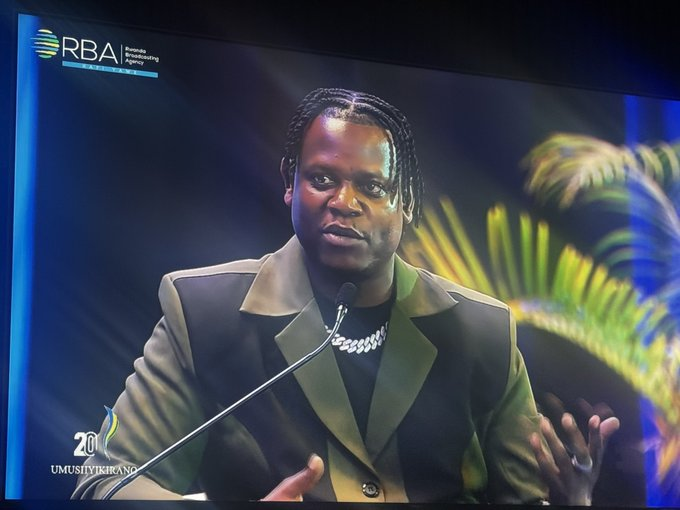
Rwandan star Bruce Melodie has called on stakeholders to recognise music as a strategic channel for promoting Rwanda’s tourism and strengthening the country’s global image, saying the sector holds enormous yet underutilised potential.
The artiste made the remarks during the National Umushyikirano Council held at Kigali Convention Centre on Friday, February 6, in the presence of President Paul Kagame and other national leaders.
He said music — especially through visually rich music videos — plays a growing role in presenting Rwanda’s natural beauty and modern cityscapes to international audiences.
“Music crosses borders without visas. Our songs speak for us everywhere,” Bruce Melodie said, adding that if the creative industry is fully integrated into the tourism strategy, it could attract large numbers of foreign visitors in the years ahead.
While Rwandan music continues to gain recognition beyond the country, he noted that the industry still struggles financially due to limited investment, despite its strong contribution to job creation.
The singer explained that many artistes intentionally highlight Rwanda’s scenery in their productions as a way of promoting the country.
He cited several of his projects as examples, including Pom Pom, a collaboration with Diamond Platnumz that features the Sonatubes roundabout, Katapila, which showcases Kigali’s skyline, and Fou de Toi, filmed at Château Le Marara Hotel in Karongi District.
“People kept asking, ‘Where is that place? Is that really Rwanda?’” he said, stressing that such reactions show the power of creative content in shaping international perceptions.
Bruce Melodie argued that the arts should be recognised as a key driver of national branding.
“We love our country and want it to be known through culture and creativity — not only through politics,” he said.
Although music is now widely accepted as a professional career, he pointed out that production costs remain extremely high, with a single song sometimes requiring between Rwf100 million and Rwf150 million to complete.
He also raised concerns about the affordability of major entertainment venues such as BK Arena and Amahoro Stadium, saying high rental fees limit opportunities for artistes to host large-scale concerts that energise the city and create economic activity.
“We miss those nights when thousands of fans come together and Kigali feels alive,” he said.
Looking ahead, Bruce Melodie highlighted the prospects of exporting Rwandan music to international markets, noting that with stronger institutional backing, professional management, and access to global platforms, the industry could attract investors and become a major contributor to tourism growth.
KIGALI TIMES