
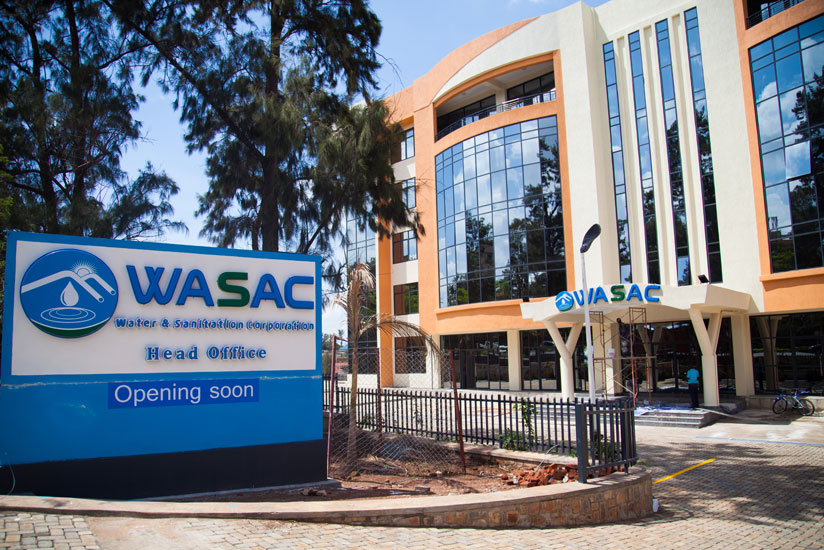
A Cabinet meeting chaired by President Paul Kagame on Wednesday, December 17, approved the appointment of Maxime Mwiseneza as the new Managing Director of WASAC Utility Ltd.
Mwiseneza takes over at a critical time as the national water utility continues to grapple with persistent challenges, including damaged infrastructure, frequent water shortages, and high levels of water loss across supply networks. He replaces Jean Berchmans Bahige, who had been serving in an acting capacity.
The appointment comes amid growing scrutiny of WASAC’s performance. Earlier this month, senators launched a nationwide assessment tour to examine the causes of water scarcity and propose solutions. The tour began on December 2 in Burera, Karongi, and Kirehe districts and is expected to conclude in Kigali on December 19.
At 42, Mwiseneza is a civil engineer with experience in public infrastructure management. He previously served as Deputy Director General at the Rwanda Transport Development Agency and holds a Master’s degree in Construction Project Management from Heriot-Watt University.
Alongside his appointment, Cabinet also approved a new WASAC Board of Directors, led by Chew Men Leong as Chair and Dederi Wimana as Vice Chair, with Jean-Pierre Nshimyimana, Albert Munyabugingo, Juliette Kavaruganda, Gemma Maniraruta, and Juliet Gakwerere serving as members.
The government has confirmed that WASAC’s long-running restructuring process is now in its final phase, aimed at improving service delivery nationwide. According to the Ministry of Infrastructure, the reforms focus on strengthening leadership, professionalising staff, and improving financial and asset management systems.
Earlier this year, the ministry revealed that 430 water supply systems across the country were non-functional, with districts such as Gicumbi and Rulindo among the most affected. Rehabilitation plans are underway, with expectations that restored systems will boost access to clean water, reduce waterborne diseases, and create employment opportunities.
However, water loss remains a major concern. Data from the Rwanda Utilities Regulatory Agency shows that more than 44 percent of water supplied through networks is lost or unbilled. Between December 2019 and March 2020, only 7.1 million out of 12.9 million cubic meters supplied were billed, leaving 5.8 million cubic meters unaccounted for.
Gabriel UZABAKIRHO / KIGALI TIMES