

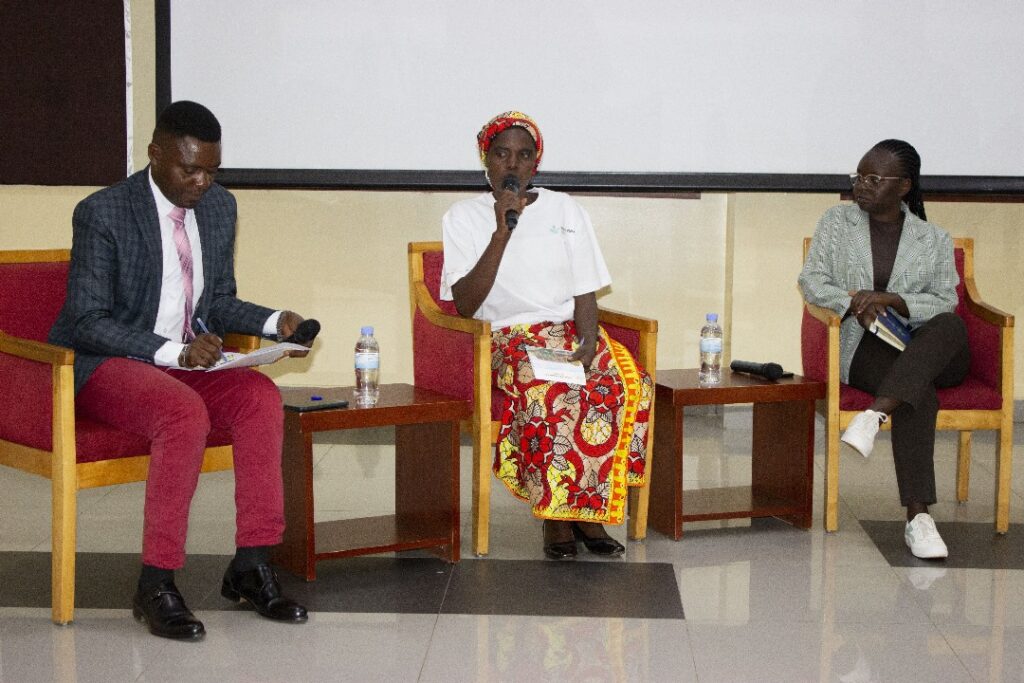
Today, Women for Women Rwanda hosted an inspiring gathering that connected women from different sectors who have created their own jobs. This meeting served as a platform to share experiences, foster collaboration, and highlight the barriers women encounter on their development journey. The event that took place in Kigali City showcased how women-led initiatives are reshaping Rwanda’s business landscape through resilience, innovation, and community-driven solutions.
One of the key voices at the event, Uwingabire Clarisse, was representing Dokmai Rwanda, shared her insights on the importance of collaboration among cooperatives producing Made-in-Rwanda products. Her company specializes in high-quality leather goods crafted by skilled artisans.
Clarisse explained how partnerships can elevate product value, giving an example of how cooperatives producing standard bags approached her team to incorporate leather elements, resulting in better quality and customer satisfaction. She also urged her fellow businesswomen to prioritize uniqueness and high standards over mass production. “Leather products must stand out. Producing too many low-quality items will only harm our market credibility,” she emphasized.
Mukarusa Valentine, a professional tailor from Nyaruguru District, shared the journey of her cooperative. She highlighted how her group has evolved to produce a wide range of products tailored to current market demands.
“We have the skills, and we’re ready to scale,” she said confidently. Valentine stressed the importance of export opportunities, noting that accessing international markets would not only increase income but also contribute to national development through taxes. “Expanding our reach means more jobs, more growth, and more pride in Made-in-Rwanda,” she added.
Agribusiness was another spotlight of the event, with Mukamariya Clementine, a member of the Ejo Heza Kibeho cooperative, sharing their venture into strawberry farming.
Based in Nyaruguru District, Clementine and her team transitioned from modern agriculture to high-value crop farming after receiving training from Women for Women Rwanda. “We are expecting a 500-ton harvest in our first strawberry season,” she revealed. “Thanks to the support and knowledge we received, we now see a profitable and sustainable future in agriculture.”
Clementine emphasized that with proper support and access to export markets, their strawberry business could significantly uplift their livelihoods. Exporting agricultural products like strawberries can provide a reliable income stream, increase cooperative profits, and stimulate business growth.
Beyond the individual impact, such exports also boost Rwanda’s economy by creating employment, attracting foreign income, and strengthening the country’s agricultural export portfolio.
Joel Niyobuhungiro, Coordinator of the Horticulture Exporters Association of Rwanda (HEAR), outlined the association’s role in supporting small-scale producers. “We build the capacity of cooperatives, connect them with local and international buyers, and advocate for favorable policies,” he said. “Our goal is to help Rwandan horticulture players thrive in competitive markets.”
However, Niyobuhungiro also acknowledged several persistent challenges facing horticultural producers. These include limited access to high-quality seeds and inputs, lack of cold storage and transportation infrastructure, and the difficulty of meeting international quality standards. In addition, smallholder farmers often face barriers in accessing financial services and export certification, which hinders their ability to scale.
Background
Women cooperatives in Rwanda have made significant strides in production across various value chains, including horticulture, leather, and tailoring. Despite progress in improving production quality and quantity, many women-led cooperatives face challenges in accessing sustainable markets, particularly for export.
On the other hand, exporters are increasingly seeking reliable local partners who can meet product quality standards and supply volumes consistently. Establishing direct linkages between women cooperative members and exporters will help bridge this gap, fostering inclusive economic growth and empowering rural women through improved market access.

Gabriel UZABAKIRIHO / KIGALI TIMES