

In an exclusive conversation, Nigerian visual artist Ademola Adeshina revealed that his latest art exhibition in Kigali is more than just a showcase; it serves as a bridge for learning and sharing. He promised to teach people from all walks of life how visual art is created, emphasizing inclusivity in the creative process and the importance of understanding art as a universal language.
On May 25, in celebration of Africa Day, Adeshina officially opened the ‘Borderless Borders’ exhibition at his own Simple Living Art Gallery, located in Kibagabaga, Kigali. The show, running until June 21, features 37 collaborative works with fellow Nigerian studio artist Moses Oghagbon. The exhibition is open daily from 9 a.m. to 7 p.m.
What began as a vision during Adeshina’s first visit to Kigali in 2022 has now become a reality. Multiple visits in 2023 further convinced him that Rwanda’s warm environment and its booming tourism sector made it the perfect place to plant artistic roots.
“The first time I came to Kigali, the vision for this gallery was born,” he said. “Now that it’s here, I feel deeply connected to the people and the country.”
‘Simple Living’—A Philosophy, Not Just a Brand
The name of the gallery, Simple Living, holds personal meaning for Adeshina. During his university days, a friend coined the nickname because of his minimalist lifestyle—something that continues to define him today. He transferred this philosophy to his art and business practices.
“I’ve always believed in simplicity. The way I live, the way I dress, and the way I see life—it’s all about keeping things simple and focused,” he shared.
A Vision That Transcends Borders
At the heart of the exhibition is a deep philosophical message, reflected in the title Borderless Borders. Adeshina explained that the concept challenges the notion of geographic separations and encourages a unified human identity.
“Borders only exist on maps,” he remarked. “Human beings are naturally connected. A Rwandan and a Nigerian, a South African and an American—we all share the same humanity.”
This idea is captured in pieces like Shared Vision, which symbolizes unity, trust, and collective direction—essentials for building a better future through collaboration.

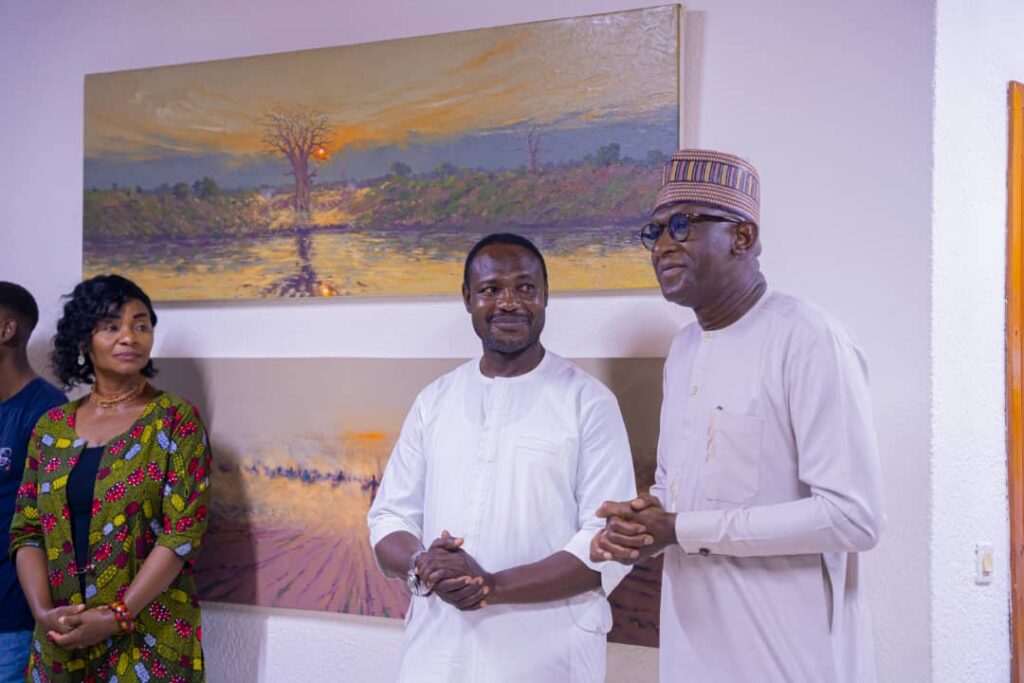
Adeshina’s background in textile design strongly influences his artwork. Many of his pieces reflect patterns that could easily be adapted into wearable art.
“When you look at some of the pieces, they can literally be printed on fabric and worn,” he explained. “That’s my textile design side merging with my fine art practice.”
His signature style is pointillism, which he’s refined over the years, including in a standout piece titled Aggression. He recalled that the artwork emerged unexpectedly during a moment of creative frustration. Using a palette knife and trusting his instincts, he developed a bold new technique that has since become central to his work.
Rwanda: A Place to Belong
Initially planning a move to Europe, Adeshina’s visits to Rwanda made him rethink his future. He found something here that resonated deeply.
“I felt at home in Rwanda in a way I wasn’t expecting,” he said. “I’m African. Why leave when I can contribute meaningfully here?”
Now, he considers Rwanda his second home. He views his role in the Rwandan art community not just as an artist but also as a teacher and contributor to the country’s cultural growth.
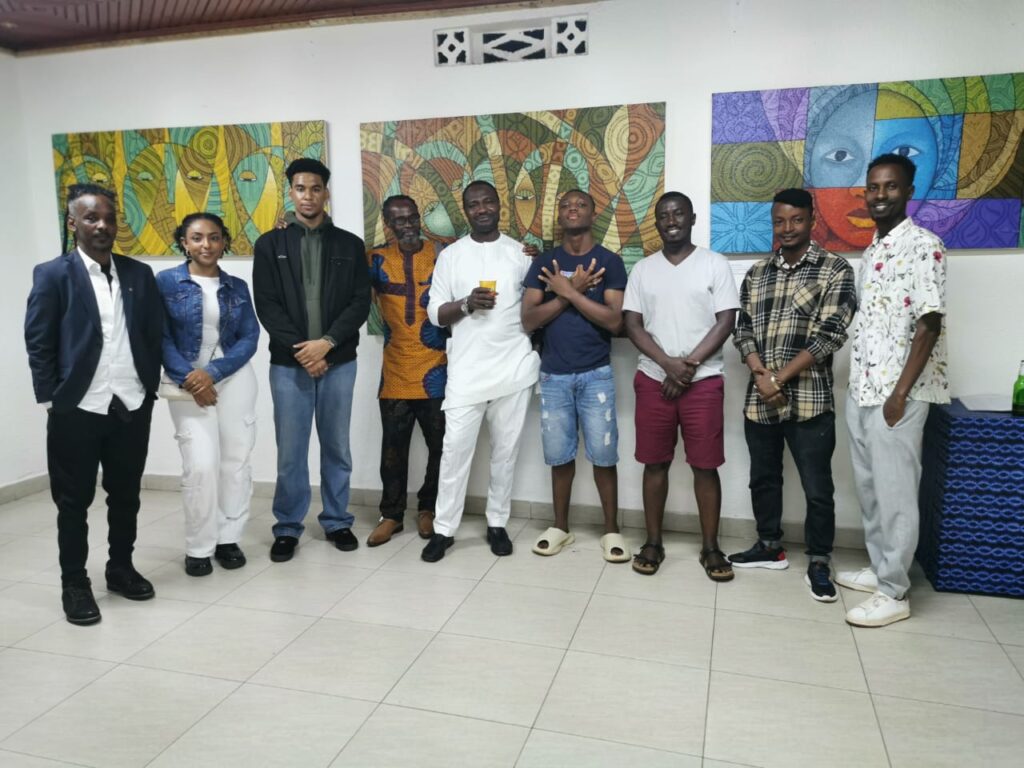
Art for All: A Promise to Educate
Perhaps the most impactful part of our conversation was his commitment to teaching. Adeshina made it clear that Simple Living Art Gallery isn’t just a business—it’s a platform to educate aspiring artists, regardless of age, background, or experience.
“I want to demystify visual art,” he said. “I want everyone—students, elders, even those who think they can’t draw a line—to come and learn. Art is for all of us.”
With this spirit, Adeshina invites the public to not only view the Borderless Borders exhibition but to also see art as a shared journey—one that begins with learning, feeling, and creating together.
Gabriel UZABAKIRIHO / KIGALI TIMES