
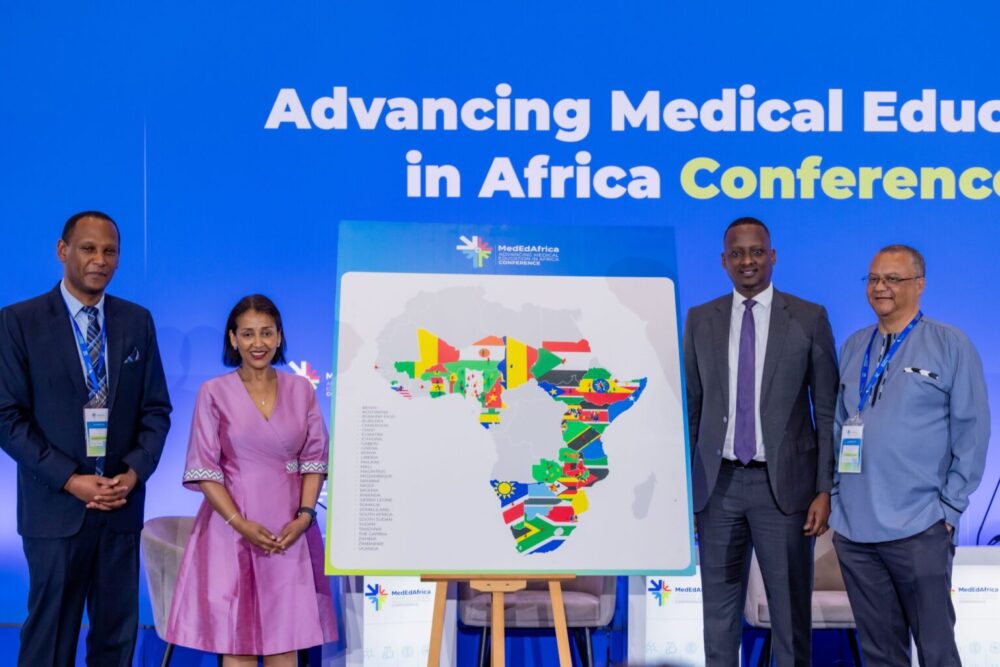
On Tuesday, March 25, Africa’s first consortium of medical schools was officially launched, marking a significant step toward enhancing medical education, fostering institutional collaboration, and addressing the continent’s urgent need for skilled healthcare professionals.
The initiative was introduced during the inaugural Advancing Medical Education in Africa conference, hosted by the University of Global Health Equity (UGHE) in partnership with Rwanda’s Ministry of Health.
Prof. Lionel Green Thompson, the consortium’s president-elect, emphasized that this launch represents a transformative shift in how African medical schools cooperate and share resources. He highlighted the existing disparities in medical education and healthcare infrastructure that have hindered the training of sufficient well-qualified doctors.
“This consortium is a commitment to African-driven solutions,” he noted. “By uniting expertise, policies, and shared goals, we aim to transform health outcomes across the continent.”
The consortium’s primary objectives include closing gaps in medical training, research, and healthcare delivery. Member institutions are expected to collaborate by sharing curricula, faculty expertise, and research opportunities.
Prof. Senait Fisseha, Vice President of Global Programs at the Susan Thompson Buffett Foundation, stressed the importance of tailoring medical education to address Africa’s pressing health challenges, such as high maternal mortality, infectious diseases, and the growing burden of non-communicable diseases.
She noted that while African nations face financial constraints due to declining international support and increasing domestic demands, these challenges should be seen as opportunities for transformation.
“We have the talent, institutions, and determination to drive change from within,” she said. “It’s time to reimagine medical education for Africa’s future by developing a shared pan-African curriculum focused on the continent’s real health challenges.”
Her views were echoed by Dr. Yvan Butera, Rwanda’s Minister of State for Health, who emphasized the need for stronger collaboration between medical schools, research institutions, and health ministries to align medical education with national health priorities. He cited Rwanda’s introduction of cancer fellowship programs as an example of how medical training can be tailored to national healthcare needs.
Africa continues to struggle with a severe shortage of healthcare professionals, with many countries failing to meet the World Health Organization’s (WHO) recommended doctor-to-patient ratio. Experts believe that the establishment of this medical school consortium is a strategic move to address this issue by producing highly skilled graduates who are committed to serving their local communities.

Gabriel UZABAKIRIHO / KIGALI TIMES