
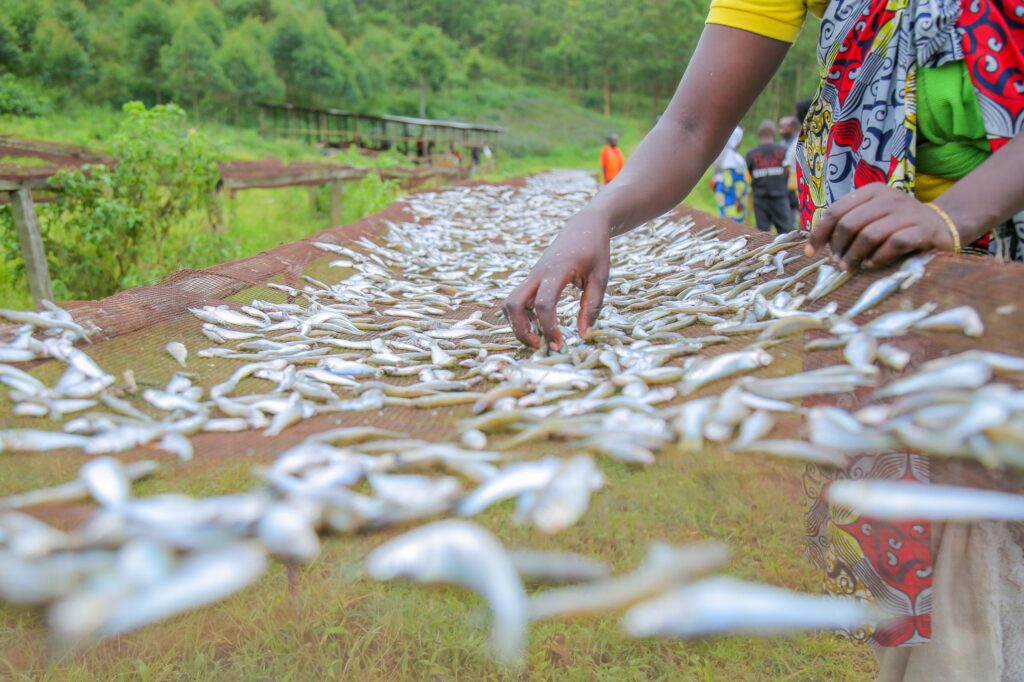
Fishermen and Isambaza fish traders in Rusizi District are grateful to the Government of Rwanda for helping them find a solution to preserve Isambaza, which is usually found in Lake Kivu. This has enabled the isambaza fish to be delivered to the market in a high-quality manner.
Isambaza are small fish that taste quite like whitebait and are a popular food for people who live along the lake shore.
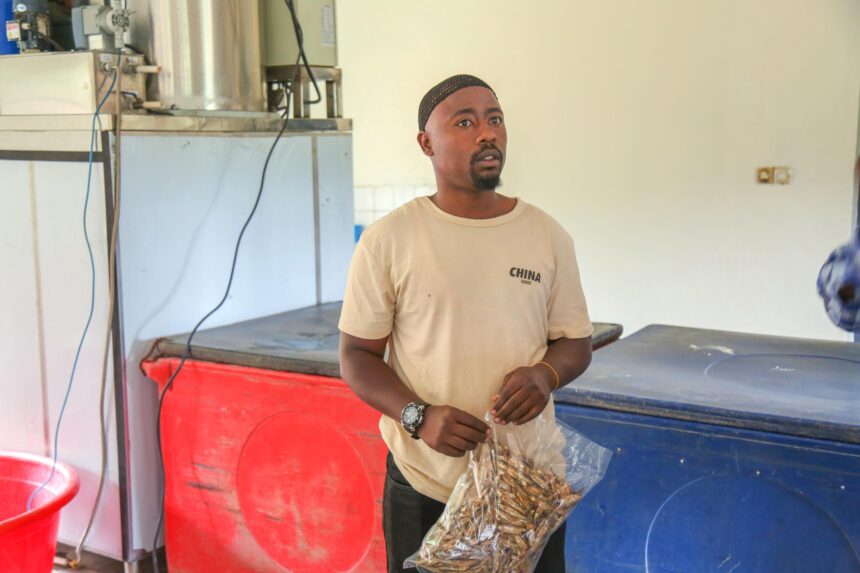
Kagombe Hamza, the Director of Projet Pêche, which produces Isambaza in Rusizi and Nyamasheke districts and sells it to traders, said that their produce is no longer spoiled thanks to the modern equipment they have received.
The equipment includes Isambaza drying machines, ice makers, and flour mills, which help preserve the fish for a long time and facilitate its transportation throughout the country and abroad without spoiling.
He stated that their machines can dry one ton of Isambaza per day and grind it the next day.
He said: “Isambaza used to take three days to dry; now, it takes only five hours. We package them so well that you can sit next to someone in a car without them knowing you have them.”
He added that this method of storing isambaza has reduced shortages in the market during the closure of Lake Kivu. Their isambaza flour prevents the spread of malnutrition among children.
He emphasized that they are pleased with the measures put in place by the government to increase fish production and that they will continue adhering to quality standards to ensure proper storage, thereby adding value to their products.
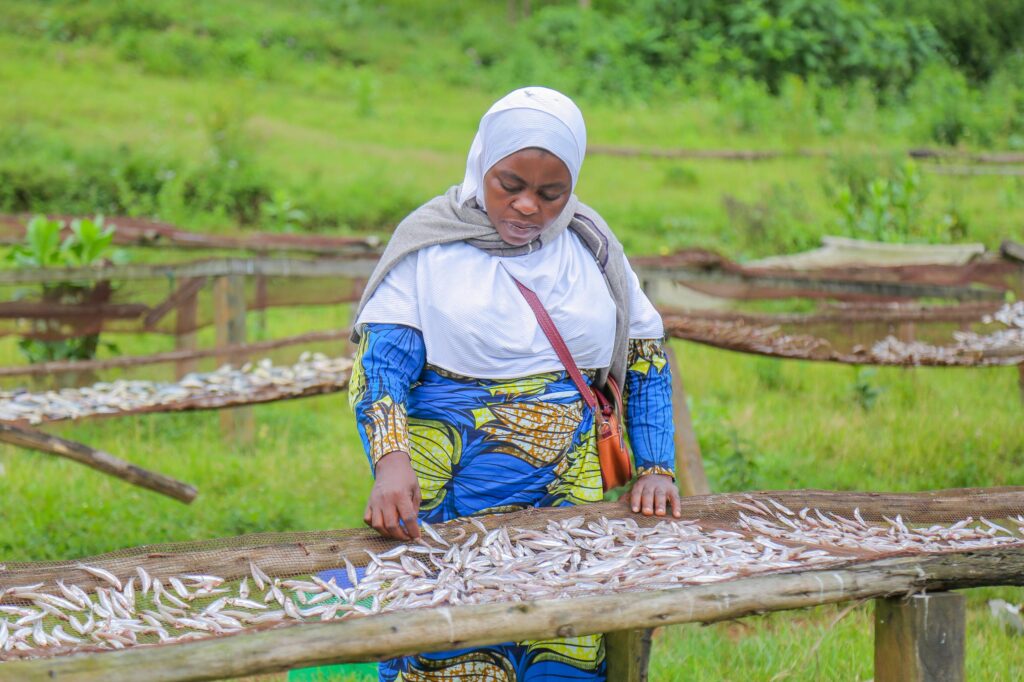
Nyirasafari Hadidja, a Isambaza trader in Kamembe Town, said that they were previously losing money because the fish were dried on substandard racks, which was especially problematic during the rainy season.
She said: “The produce was often spoiled because fishermen did not pay attention to its quality, and Isambaza caught at different times were mixed together. This caused many traders to lose buyers due to the poor condition of them.”
However, among the challenges they still face is that the Isambaza produced in Rusizi District is sometimes sold by fishermen without first being taken to the inspection center for testing. Additionally, some of it is smuggled into the Democratic Republic of Congo (DRC) without proper identification.
Kabanguka Nathan, an employee of the National Child Development Agency (NCDA), urged Rusizi residents to consume Isambaza and fish products to combat malnutrition which affects many in the district.
He said: “We also encourage the population to eat a balanced and nutritious diet to fight malnutrition.”

Gatera Emmanuel, head of the quality regulation department at Rwanda Standards Board (RSB), stated that the government continues to promote fish farming because of its role in boosting the country’s economy, improving nutrition, and combating malnutrition.
He said: “But what made us focus here is the crucial role that fish and fish products play in increasing nutrient intake. Processed fish products contribute significantly to the nutritional value of the food we consume daily.”
He added that RSB, NCDA, and the Ministry of Agriculture and Animal Resources (MINAGRI), through the Kwihaza project, have launched a campaign to promote the quality of vegetables, fruits, fish farming, and distribution, ensuring compliance with quality standards.

This campaign aims to educate farmers, livestock breeders, and food processing industries about government strategies for delivering high-quality products. It also highlights how the Quality Improvement Program benefits them and how safe food practices can help combat malnutrition.


Gabriel UZABAKIRIHO / KIGALI TIMES
Source – UMUSEKE