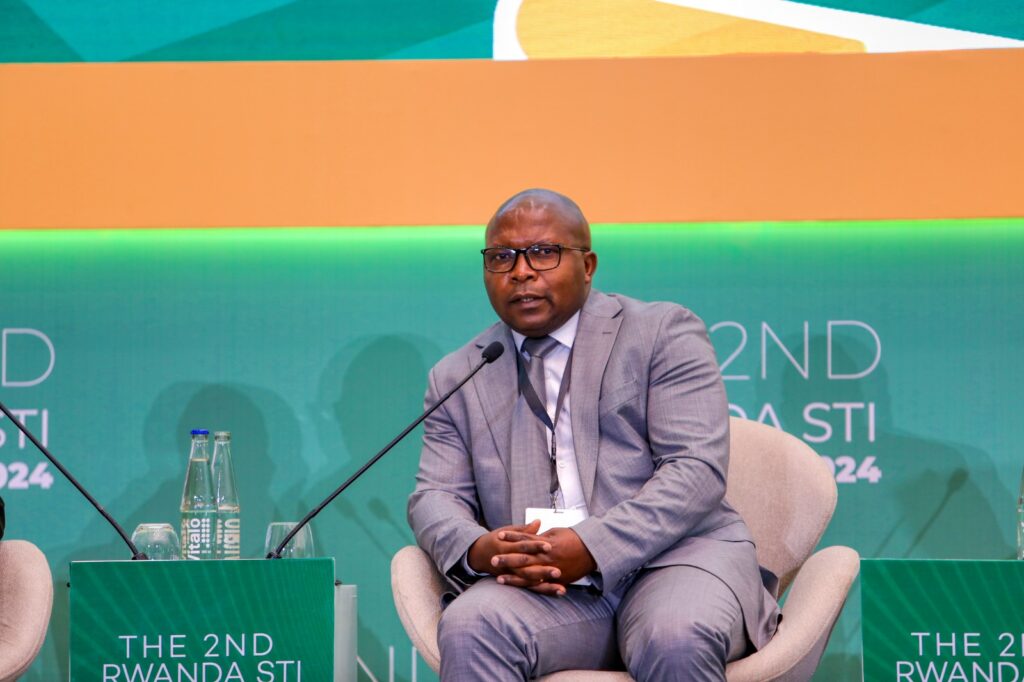
Today, on 23rd September 2024, The National Council for Science and Technology (NCST) officially launched the 2nd Rwanda Science, Technology, and Innovation (STI) Conference, at the Kigali Convention Centre (KCC).
The two-day event brings together global experts, policymakers, researchers, and innovators to address one of the most pressing global challenges: promoting climate-resilient agriculture for improved food security and nutrition.
Building on the success of the inaugural 2022 conference, this year’s event revolves around the theme “Promoting Climate Resilient Agriculture Through Science, Technology, and Innovation for Improved Food Security and Nutrition.”
The conference is seen as a crucial platform for harnessing science, technology, and innovation (STI) to develop long-lasting solutions that will help farming communities, particularly in Rwanda, to withstand the adverse effects of climate change.
Addressing Global and Local Challenges Through Innovation
The conference’s discussions are particularly timely, as countries worldwide, including Rwanda, grapple with the impacts of climate change on food security.
From extreme droughts to pest invasions, the challenges facing agricultural productivity are increasing. The STI conference aims to develop actionable strategies to build resilience in food systems, ensuring that they can continue to provide for populations despite environmental stresses.
Dr. Telesphore Ndabamenye, Director General of Rwanda Agriculture and Animal Resources Board (RAB), emphasized the need for Africa to better utilize its natural resources in combating droughts, stating, “The first challenge is how policymakers don’t make use of the sunshine and water that Africa has during droughts instead of complaining.”
He called for more robust integration of climate-smart agriculture policies and stressed the importance of ensuring that farmers are adequately equipped with knowledge and tools to implement these approaches.
Collaboration and Policy Integration for Lasting Solutions
Prof. Bizoza Alfred from the University of Rwanda also highlighted the importance of collaboration in addressing food security challenges.
He underscored the need for nutrition-sensitive agriculture to improve both the livelihoods of people and ensure long-term food security.
He emphasized that integrating food production systems with sustainable land use and soil fertility practices is crucial for resilient agricultural development.
Dr. Ndabamenye reinforced this point, urging policymakers to prioritize protecting land and maintaining soil fertility, as this is the foundation for feeding populations in the face of climatic challenges.
He noted, “Recommendations from food systems must focus on protecting our land—that’s how it will be easy to feed people. We also need to feed the soil through proper fertilization.”
A Call to Action: Climate Resilience and Food Waste
In his keynote address, Dr. Ildephonse Musafiri, Rwanda’s Minister of Agriculture and Animal Resources, spoke of the burdens that pest invasions, plant diseases, and prolonged droughts place on agricultural production.
He stressed the urgency of addressing these challenges, noting that the conference is expected to generate solutions that foster climate resilience and reduce food waste.
“The conference should help us solve these problems through collaboration, which is key to climate resilience and minimizing food loss,” Dr. Musafiri stated.

NCST’s Role in Driving Innovation for Sustainable Development
The NCST remains committed to advancing Rwanda’s agenda in science, technology, and innovation. Through its programs and partnerships, the council seeks to promote sustainable development, improve the quality of life for Rwandans, and address global challenges such as climate change.
By fostering research, innovation, and the adoption of cutting-edge technologies, NCST is working to ensure that Rwanda’s agricultural sector becomes more resilient, efficient, and sustainable.
As the second day of the conference approaches, participants are expected to continue discussing strategies for achieving these ambitious goals, with a focus on practical recommendations that can be implemented across different sectors.
The 2nd Rwanda STI Conference 2024 serves as a vital platform for global cooperation, innovative thinking, and policy development to ensure a future where agriculture not only survives but thrives amidst the growing threat of climate change.