
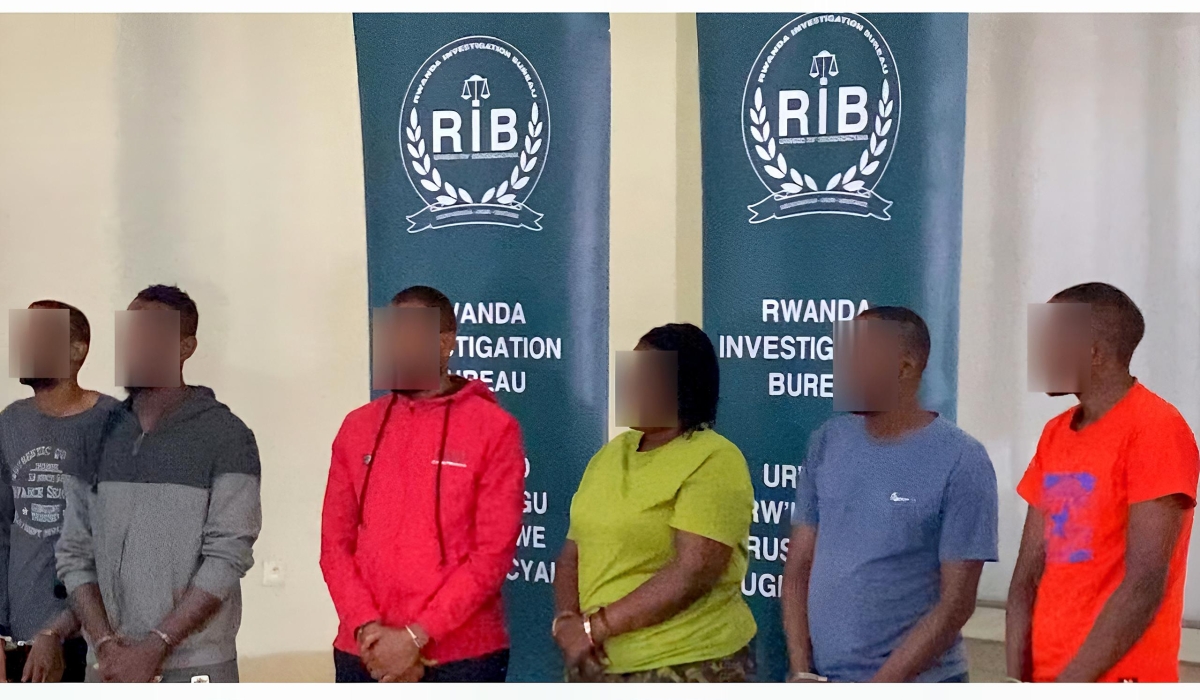
On Thursday, July 25, the Rwanda Investigation Bureau (RIB) presented six individuals—four men and two women—suspected of being part of a seven-person crew involved in an attempted regional bank heist. The seventh suspect was absent due to health reasons.
The authorities intervened during the heist, recovering Rwf65 million of the approximately Rwf99 million stolen. The suspects include five Rwandans and two Ugandans. The stolen funds came from various local and regional bank accounts and were deposited into the suspects’ accounts and debit cards.
RIB spokesperson Thierry Murangira revealed that the scheme was orchestrated by a “mastermind,” who recruited individuals to open legitimate accounts and obtain ATM cards. These recruits then provided account details, including numbers, bank identification numbers (BIN), and ATM card information, to the mastermind.
A regional bank was specifically targeted, and efforts are ongoing to return the stolen funds. The suspects were arrested on July 20.
Murangira stressed the importance of protecting banking information, noting, “Banking information is sensitive and private. Anyone promising monetary gains in exchange for your data is likely involved in illegal activities.”
The suspects were promised a 40 percent share of the funds deposited in their accounts. Murangira warned the public against falling for such schemes, as they often lead to detection and arrest.
The suspects admitted that they found Rwanda’s financial system too complex to penetrate, prompting them to attempt withdrawals from neighboring countries. They had obtained access codes to breach the system, but were caught by RIB before they could complete the theft.
Investigations are ongoing to identify other participants, with the names of the banks involved withheld to protect their reputations.
Murangira urged banks to employ measures to prevent unauthorized access to funds, particularly from foreign branches with accounts showing unusual activity.
The suspects face charges including unauthorized disclosure of access codes, continuous fraudulent use of data processing systems, and unauthorized access to computer systems. If convicted, they could face two to 15 years in prison and fines up to Rwf30 million.