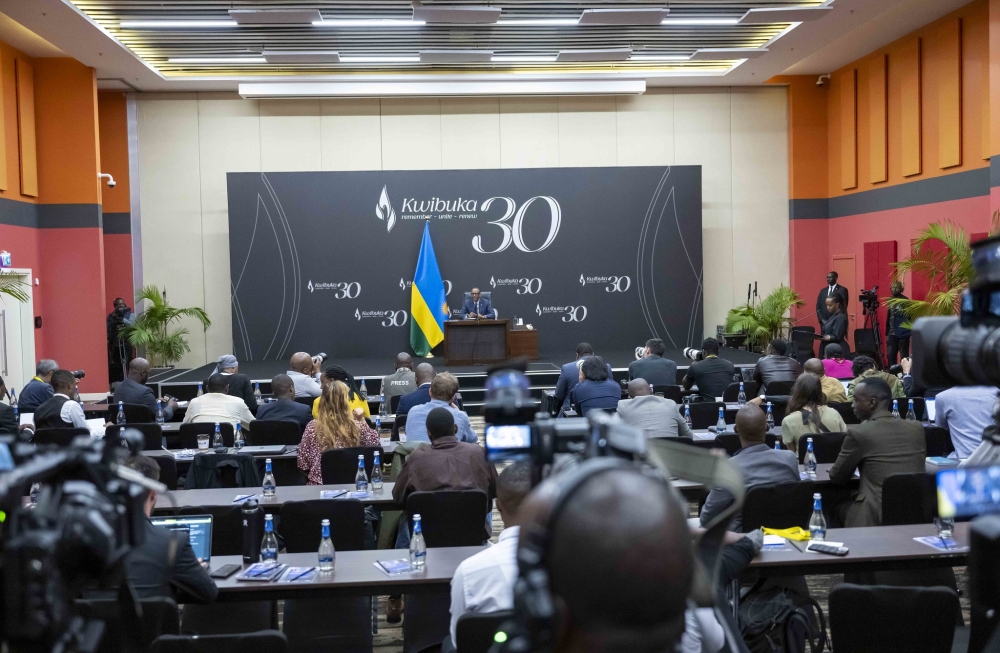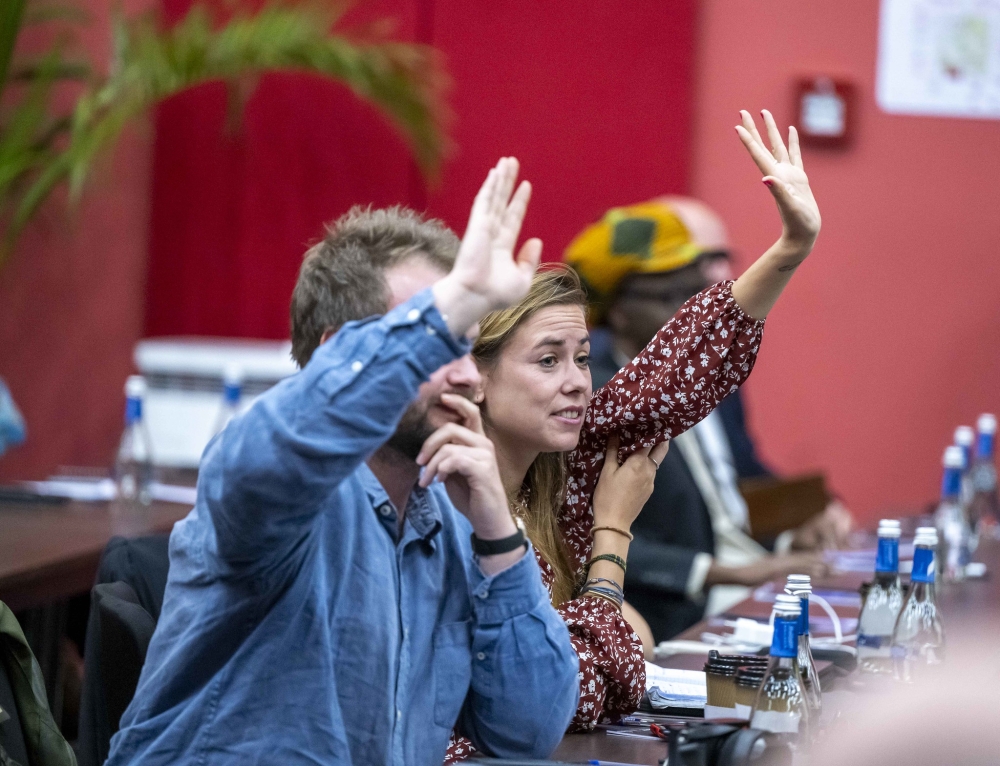
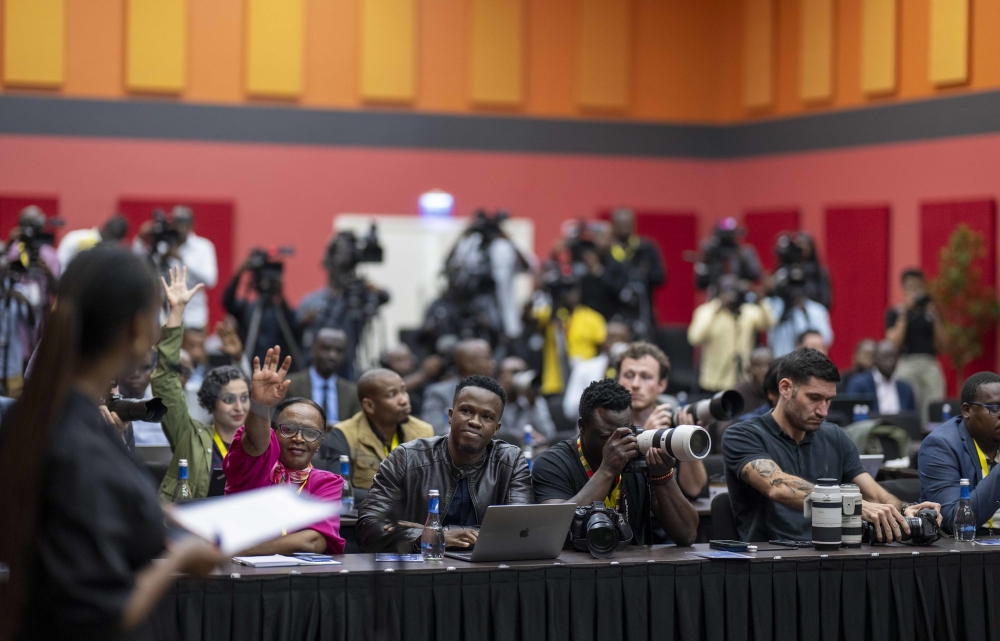
The Head of State held a press conference attended by representatives from both local and international media outlets.
When questioned about those who hesitate to acknowledge the country’s somber history, a query primarily prompted by a social media post from US Secretary of State, Antony Blinken, Kagame reiterated his belief that he had previously reached an understanding with US authorities nearly a decade ago, ensuring Rwandans could commemorate without obstruction.
Furthermore, the Head of State mentioned that this issue “was among the topics discussed” during conversations with former US President Bill Clinton, who led the American delegation during the 30th commemoration ceremony in Rwanda.
“The US dispatched a delegation to stand in solidarity with us, designating Bill Clinton to head the delegation. We engaged in extensive discussions regarding our bilateral relations and the prevailing circumstances.”
In reference to the US’s failure to acknowledge the 1994 Genocide against the Tutsi, he remarked, “This was just one of the many aspects discussed. Our concerns were addressed long ago by articulating our stance clearly.”
“Not too long ago, around 2014 or 2015, we received messages of support from around the globe as we commemorated. At that time, we received a message that expressed sympathy through Kwibuka, yet also included references to democracy, human rights, and freedom—almost implying these were absent in our nation.
He continued, stating, “We responded to the US, drafting a two-part letter. Firstly, we emphasized that the US, or any other government, retained the freedom to convey any message to us, and we were prepared to accept whatever they presented. Secondly, we underscored that while we appreciated their participation in our commemorative events, we had a single request regarding these other matters: we kindly asked them to join us in commemorating and to conclude there.”
Kagame emphasized that the US, along with any other government, had the prerogative to hold Rwanda accountable on any day except the commemoration day.
“I deemed it a fair and reasonable proposition,” he remarked.
Rwandans voiced criticism towards US Secretary of State Antony Blinken for his failure to explicitly acknowledge that the genocide specifically targeted the Tutsis.
This contention arises as Rwanda marks the 30th anniversary of the meticulously orchestrated massacres that claimed the lives of over 1 million innocent civilians.
Commemorative activities include the lighting of a flame of remembrance by President Kagame at the Kigali Genocide Memorial Centre, one of four memorial sites. This flame will burn for the next 100 days as the nation pays tribute to the victims of this tragic massacre.
During his address on Sunday, April 7, Kagame reiterated that any ambiguity regarding the identity of the genocide victims constitutes an effort to distort history and disrespect the victims’ memory.
“Rwandans find it incomprehensible why any nation would deliberately remain vague about the targeted victims of the genocide. I fail to comprehend such ambiguity. In truth, such ambiguity amounts to denial, which is an offense in itself, and Rwanda will perpetually contest it.