
Exercise at home without equipment,A home workout is not only straightforward but also effective, cost-free, quick, and enjoyable. You have complete control over the pace and ambiance of your training. Just follow these guidelines for exercising at home.
Considering heading to the gym today? The inclination to postpone often sets in quickly, accompanied by familiar excuses: the lengthy commute, the consistently crowded classes, and the chilly, unpleasant weather.
However, excuses are now a thing of the past. You can easily engage in your workout routine within the comfort of your home. These six fitness and strength exercises are designed to enhance your well-being and accommodate any lifestyle. Let’s get started!
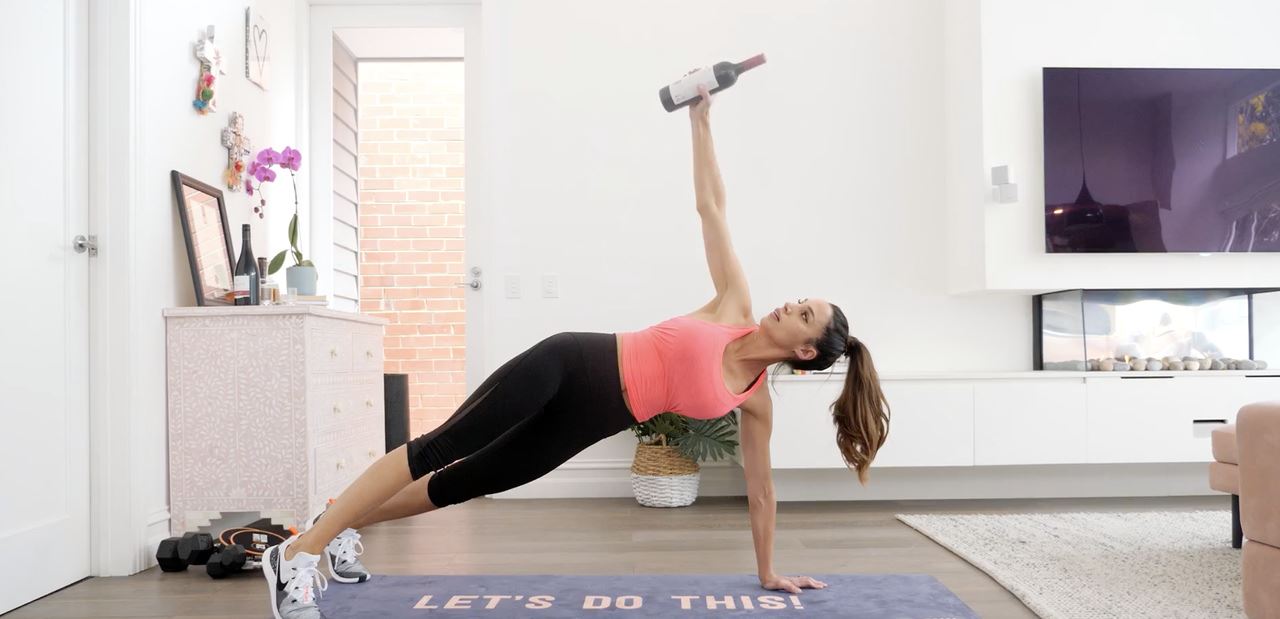
Skip the gym and get in shape at home with these exercises.
No need for an expensive annual gym subscription – you can actively exercise right in your living room. Numerous compelling reasons make staying at home a great choice.
Checklist for your perfect training area at home
Prepare a space of 6 – 8 square meters.
Take a moment to ventilate the area.
Ensure everything is ready: water, music, towel, and possibly a mat, mirror, dumbbells, etc.
Minimize distractions: mute your cell phone, turn off the radio, and suggest that family members move to another room.
Allocate approximately 30 minutes for your workout.
Energize the atmosphere by turning up the music, playing the workout video, or relishing in a moment of peacefulness.
Let’s get started!

6 exercises for training at home
| Sit-ups or Crunches |
That’s the way to do it: Lie on your back, with your legs bent and hands positioned either behind your head or beside your body—choose the more comfortable option for you. Ensure your lower back stays in contact with the ground throughout the entire exercise. Now, smoothly engage your abdominal muscles to lift yourself repeatedly, avoiding any swinging motion
|
| Squats | You train your entire leg muscles effectively with simple knee bends.
That’s the way to do it: Position your feet hip-wide. Crouch down. Do not push your knees forward. Imagine you are sitting on a chair – the movement goes backwards rather than forwards. If you have problems with your knees, try this lying position: lie on your side, bend your legs (90 degrees) and raise and lower your upper leg slightly, 15 repetitions without a break. Then change sides.
|
| Push-ups | Not an evergreen for nothing: The push-ups. Those who train at home can’t get past pushups. This simple exercise strengthens every muscle in the body.
That’s the way to do it: Put your hands parallel and shoulder-width apart. Keep your back straight and your neck as unstrained as possible. And now: Keep on squeezing. These “cheating” variations are well suited for untrained people: Put your weight on your knees, not on your feet. This way you will have to carry less weight. Or stand up and put your hands at hip height on a chest of drawers or a heavy table, or simply squeeze off the wall.
|
| Superman | Here you are working on your back muscles.
That’s the way to do it: Lie on your stomach. The legs are parallel. Stretch out your arms above your head and put them down. Now lift your legs and arms up at the same time so that your back has to work. Hold it briefly and put it down again. Repeat.
|
| Planks | There is strength in silence. This simple exercise is really something. When planking, you remain stiff like a board over the floor. This requires the triceps, shoulder, chest, abdominal and leg muscles.
That’s the way to do it: You lie on your stomach. Now lean on your forearms. Your elbows are at shoulder level and your forearms are parallel. Your toes are pressing off the floor. Now bring tension into the forearm support. Do not sag! Try to hold the position for 45 to 60 seconds. Perform the exercise three times.
|
| Jumping Jack | The Jumping Jack completes our work-out at home with some endurance training.
That’s the way to do it: Perform Jumping Jacks by simultaneously bringing your arms and legs together or apart while leaping into the air. This exercise is excellent for cardio workouts or as a concluding exercise, effectively engaging the muscles to their maximum capacity |
