
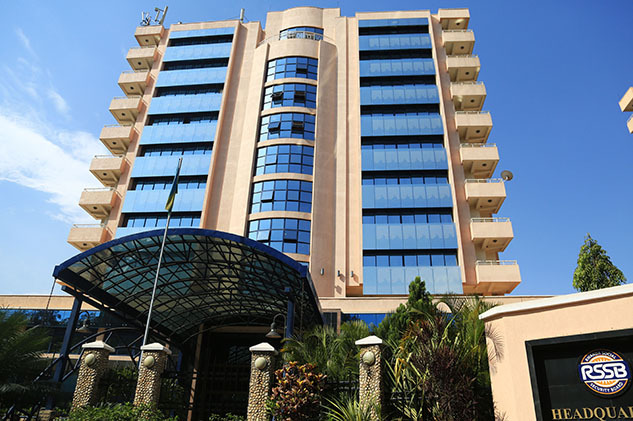
Rwanda’s public pension fund continues to grow at a rapid pace, with assets reaching Rwf 2.4 trillion by the end of the third quarter on September 30 — a 33.8% jump compared to the same period last year, according to new figures from the National Bank of Rwanda (BNR).
BNR attributes the surge mainly to higher member contributions and stronger investment performance, both of which boosted the fund’s overall value.
A major contributor to the growth is Ejo Heza, the national long-term voluntary savings scheme managed by the Rwanda Social Security Board (RSSB). Ejo Heza’s total assets climbed 29.2% to hit Rwf 84 billion, a rise driven by intensified mobilisation campaigns, especially among informal sector workers who still make up the bulk of its membership.
Benjamin Cyusa, Retail Sales Manager at Prime Insurance, noted that inflationary pressures have encouraged people to set aside more for retirement.
“RSSB’s decision to raise contribution rates has clearly played a role,” he said.
Last year, RSSB doubled the mandatory pension contribution for formal sector employees from 6% to 12% of gross monthly salary. The rate will gradually increase to 20% by 2030. The previous 6% structure had been unchanged since 1962, even as life expectancy in Rwanda rose from 47 years to 69 years.
Calls for Adjusting Pension Benefits
Despite the swelling fund size, pensioners say the benefits need to keep pace with rising living costs.
Speciose Mukakarangwa, who represents the pensioners association in Kicukiro District, said the 2018 benefit adjustments were helpful but no longer sufficient.
“There is still a need for periodic reviews to protect retirees from depreciation. That can only happen if the fund remains strong,” she said.
Under Presidential Order 69/2018, the minimum monthly pension was raised to Rwf 13,000, a significant jump from previous amounts that were as low as Rwf 2,800 or Rwf 5,200.
Emmanuel Ruvugwaho, a pensioner and head of the Huye District pensioners’ association, shared similar sentiments.
“When I retired in 2013, we waited until 2018 for an adjustment, then again in 2024. The gaps are long,” he said, adding that increased contributions should eventually lead to better benefits.
He also highlighted the growing participation in supplementary schemes such as Ejo Heza, saying it shows positive progress in building a savings culture.
More Reforms Underway
Earlier this year, RSSB announced new reforms aimed at raising pension benefits once again. The adjustments will vary across income brackets, with retirees in the lowest categories receiving the largest increases.
For example:
- The minimum monthly pension will rise by 159.3%, from Rwf 13,000 to Rwf 33,710.
- Those currently earning Rwf 20,000 per month will receive Rwf 47,710, a 138.5% increase.
- Pensioners receiving Rwf 50,000 will be upgraded to Rwf 92,710, an 85.4% jump.
- Retirees earning Rwf 1 million monthly will get Rwf 1,095,210, reflecting a 9.5% adjustment.
The reforms aim to ensure that benefits remain fair, sustainable, and responsive to economic realities.