
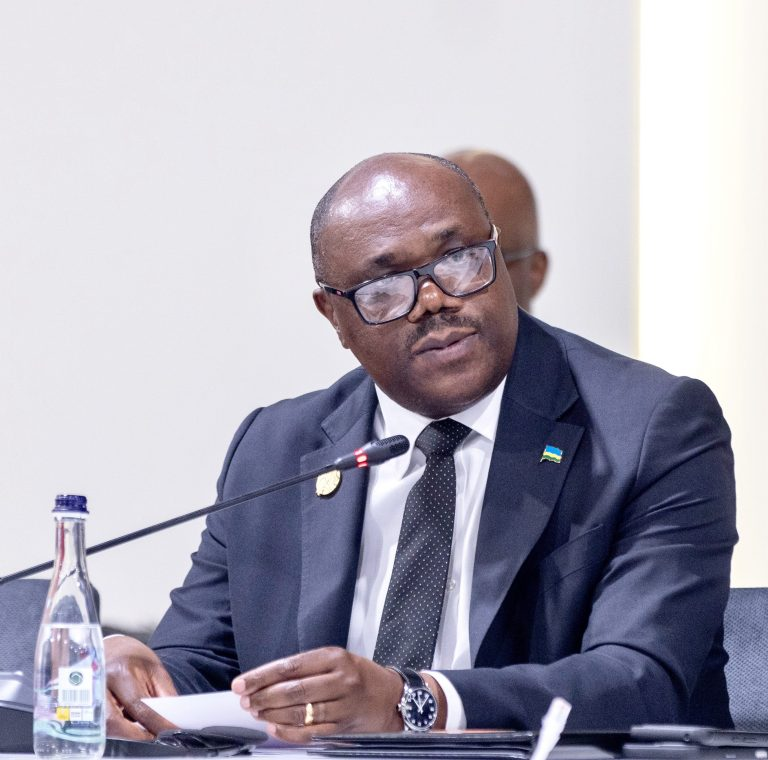
Rwanda’s efforts to promote resource efficiency and cleaner industrial production have helped industries and small and medium-sized enterprises (SMEs) generate $6.5 million in net savings from a $5 million investment, Prime Minister Dr. Justin Nsengiyumva has announced.
He made the remarks on November 11, 2026, during a high-level dialogue at the 31st United Nations Climate Change Conference (COP31), taking place in Antalya, Türkiye.
The session was held under the theme “Unlocking the Opportunities of Green Industry: Investment, Jobs and Economic Growth for All Countries.”
Dr. Nsengiyumva explained that Rwanda’s implementation of national climate and development programmes had helped reduce energy consumption by more than 41 million megajoules and cut annual carbon dioxide (CO₂) emissions by over 30,000 tonnes.
He said the results demonstrate that environmentally sustainable industrial practices can deliver significant commercial benefits while contributing to climate action.
“Our achievements demonstrate that advancing green industries makes business sense. Rwanda’s resource efficiency and cleaner production programme has helped industries and SMEs reduce energy consumption by more than 41 million megajoules and emissions by over 30,000 tonnes of CO₂ annually, generating $6.5 million in net savings from a $5 million investment,” he said.
The Prime Minister noted that Rwanda views the development of green industries as an opportunity to attract investment, create jobs and strengthen its response to climate change.
“For Rwanda, advancing green industries is essential for addressing climate change and presents an opportunity to accelerate economic transformation, attract investment and create decent jobs,” he said.
He explained that the country’s ambitions are guided by its Green Growth and Climate Resilience Strategy, Vision 2050 and the third Nationally Determined Contribution (NDC 3.0).
Among the sectors he identified as offering significant investment opportunities are renewable energy, clean cooking solutions, electric mobility and sustainable agriculture.
Other priority areas include the circular economy, recycling and waste recovery, as well as environmentally friendly cooling technologies. He noted that many of these sectors align with the priorities being discussed at COP31.
Rwanda Highlights Investment Opportunities in Sustainable Cooling
Dr. Nsengiyumva also highlighted sustainable cooling as an increasingly important investment opportunity, given the rapidly growing global demand for cooling services and technologies.
He pointed to the Kigali Amendment to the Montreal Protocol, noting that its full implementation could help prevent up to 0.5°C of global warming by 2100.
He added that expanding sustainable cooling technologies could create employment opportunities in manufacturing cooling equipment, cold storage facilities and the transportation of temperature-sensitive goods.
The Prime Minister called on all countries to ratify and accelerate the implementation of the Kigali Amendment.
Regarding Rwanda’s efforts, he said national cooling strategies, minimum energy performance standards and financing mechanisms for green projects provide investors with a foundation for investing in the sector.
Prime Minister Calls for More Financing for Green Industries
Dr. Nsengiyumva stressed that expanding green industries requires partnerships capable of reducing investment risks and making projects more attractive to financiers.
He identified several financing mechanisms that could support the sector, including blended finance, concessional loans, guarantees and climate finance.
These mechanisms, he explained, could help unlock funding for projects that might otherwise struggle to secure investment.
“We encourage development partners and financial institutions to go beyond their commitments and engage in practical partnerships that deliver measurable economic, social and environmental benefits,” he said.
His remarks underline Rwanda’s push to position green industrial development as both a climate solution and a driver of economic growth, investment and job creation.